
500.000+
Prodotti gestiti

500.000+
Prodotti gestiti
Garanzia
12 mesi per tutti i prodotti
consegna espressa
Sempre e ovunque
4,9
Recensioni nella media
Ovunque
Supporto in tutto il mondo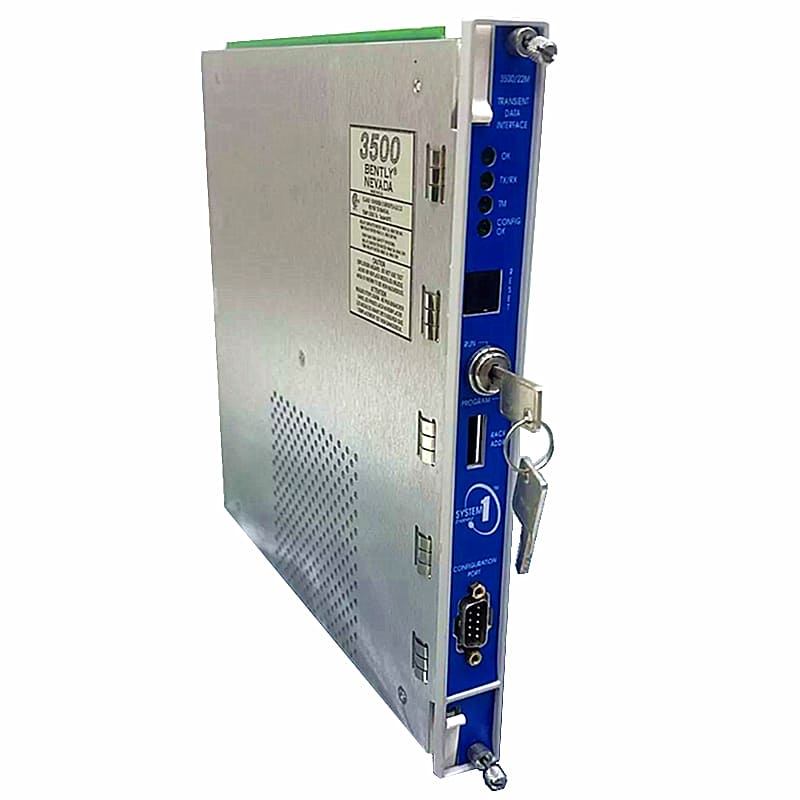
3500 System, Proximity Probes, Sensors & Transducer Systems, AHM Sensors, Accelerometers, etc.
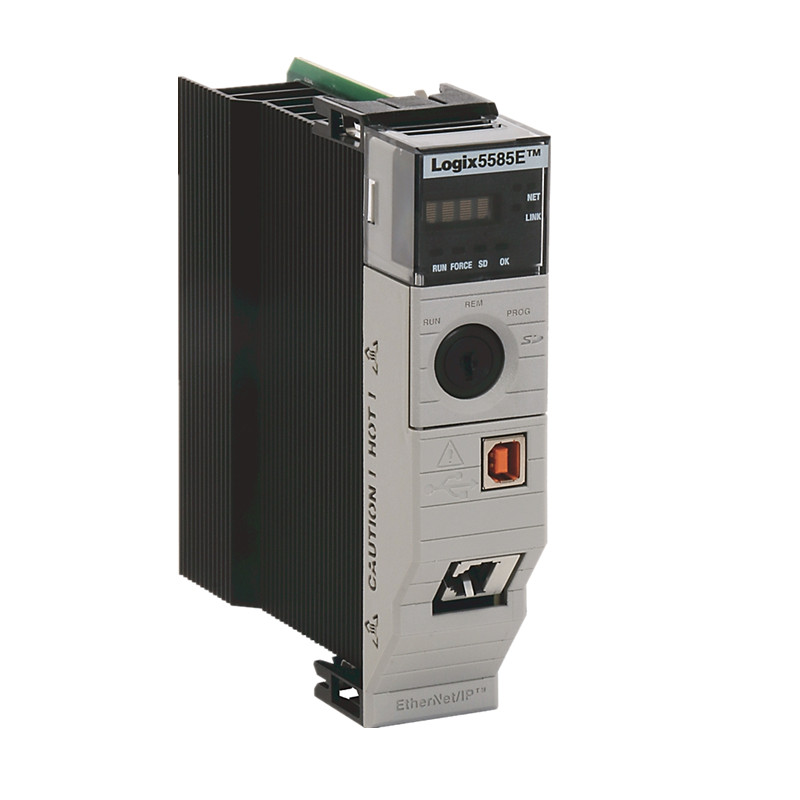
ControLlogix, CompactLogix, Flex I/O, ecc.
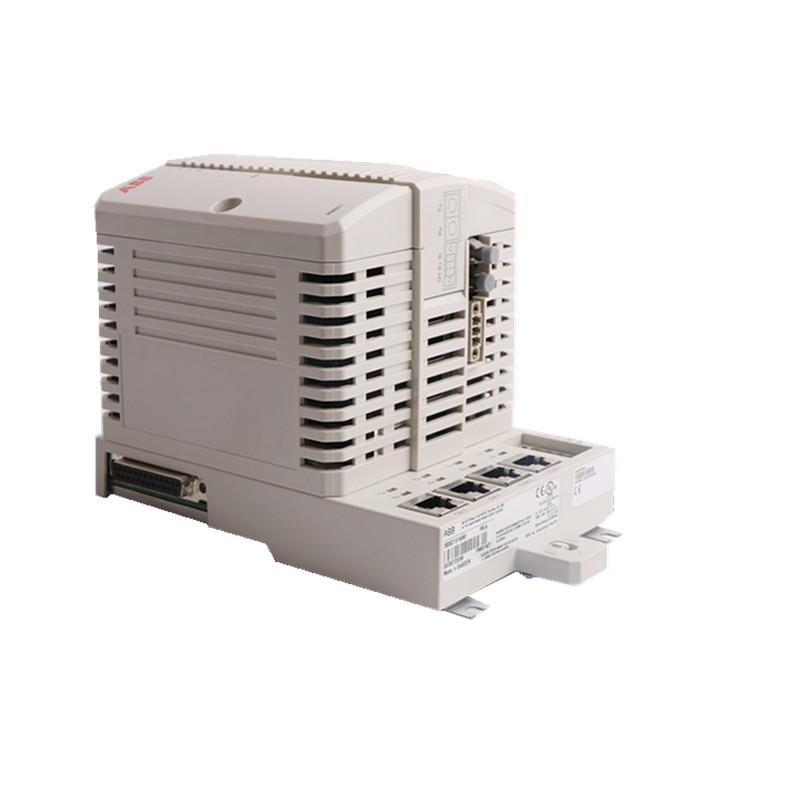
DCS 800xA, AC500, S700, S800, S900, ecc.
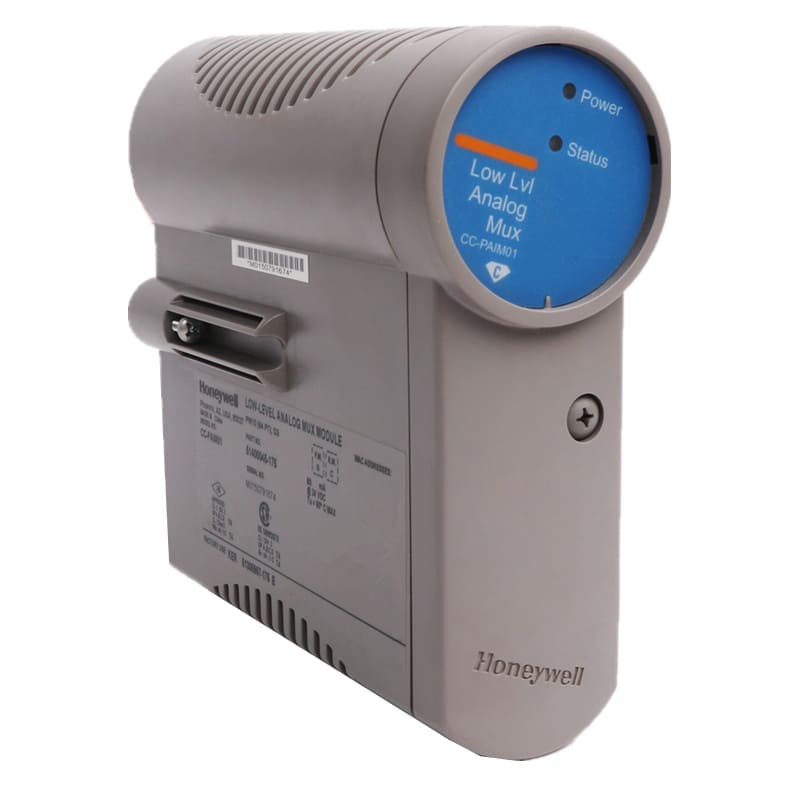
Experion PKS C300, HC900, ecc.
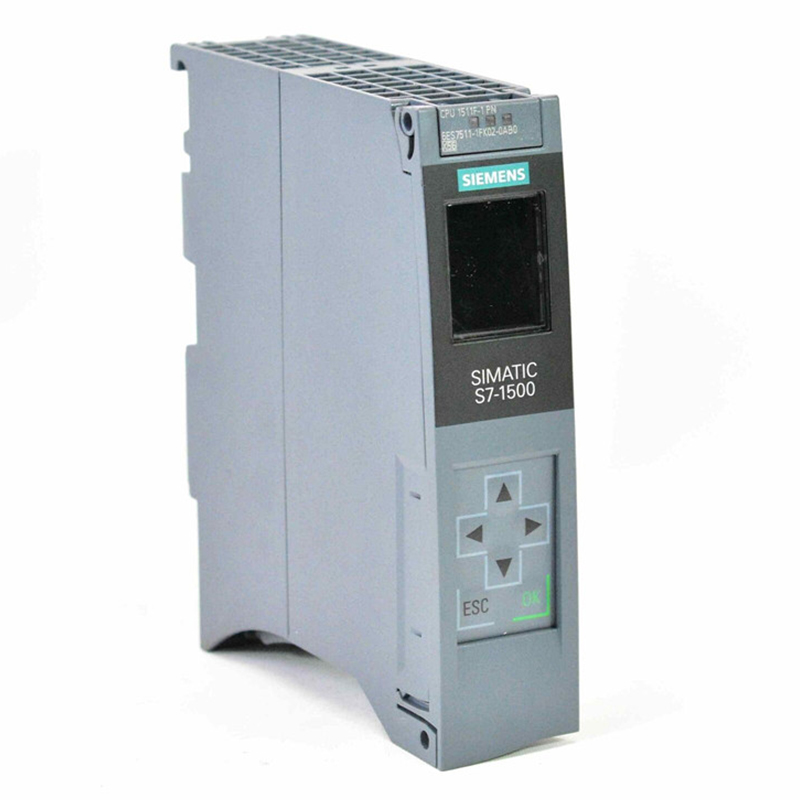
Simatc S7-200, Sh-400, Sh-1200, Sh-1500, Hmi, H.
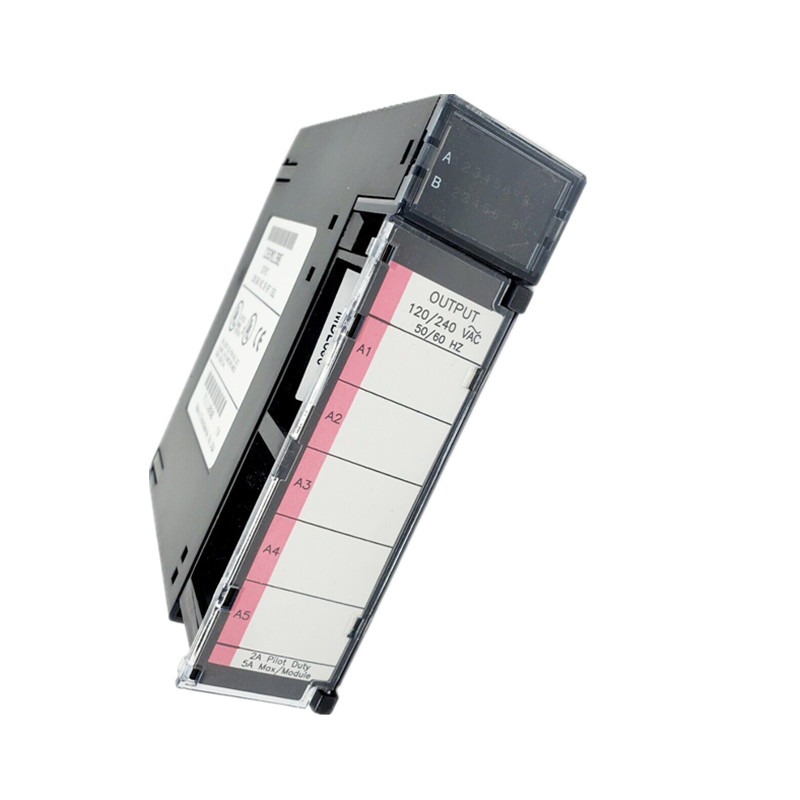
90-70, 90-30, PACSystems* RX7i, RX3i, VersaMax PLC, ecc.
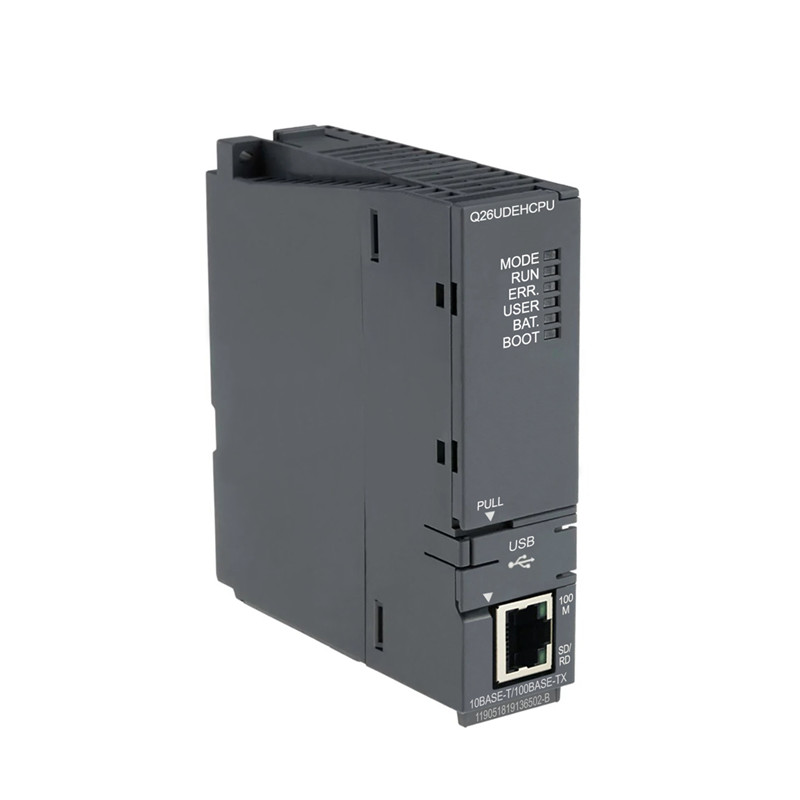
Serie MELSEC-Q, serie MELSEC-F, serie MELSEC iQ-F, ecc.
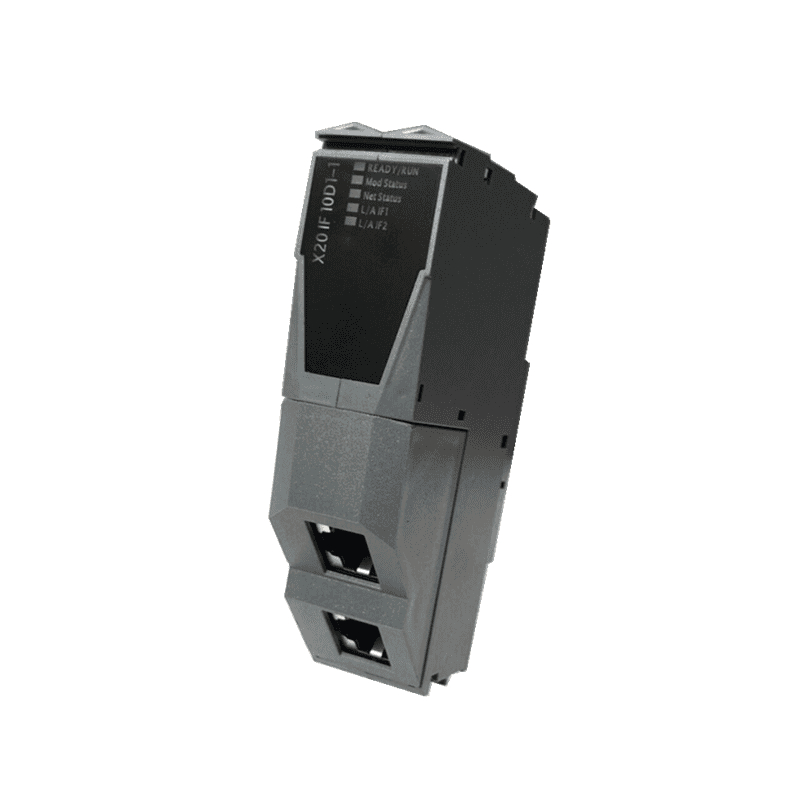
Sistema PLC, sistema I/O, sistema X20, sistema X67, ecc.
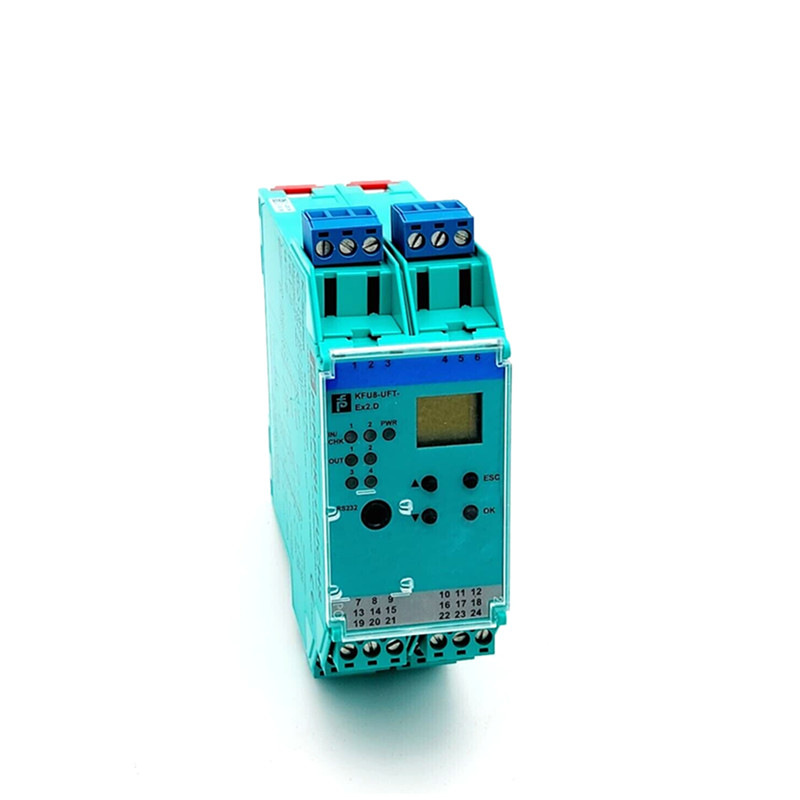
Barriere isolate (Sistema K), ecc.

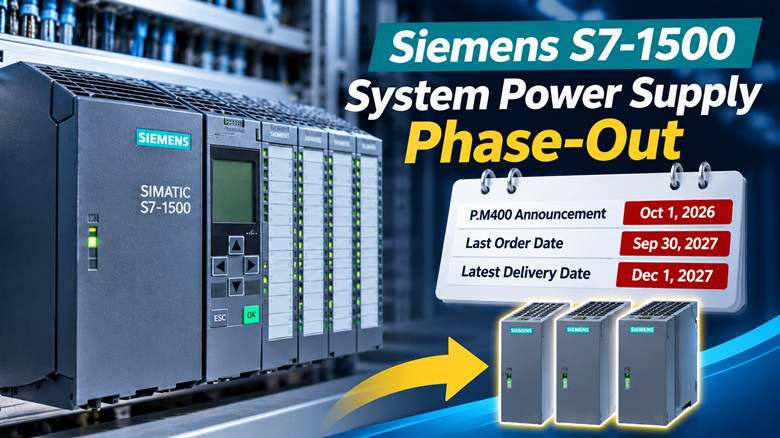
*Industry news | November 2, 2026* Siemens has moved four SIMATIC S7-1500 and ET 200MP system power supplies into phase-out, and the milestone ladder is now published. The announcement is support entry 110005831 on Siemens Industry Online Support. It sets the P.M400 announcement milestone at 1 October 2026 for the following article numbers: 6ES7505-0KA00-0AB0, 6ES7505-0RA00-0AB0, 6ES7505-0RB00-0AB0, 6ES7507-0RA00-0AB0 and the 6ES7507-0RA00-0AB0-ZC77 variant. Orders for all of them can be placed until 30 September 2027. The latest possible delivery date is 1 December 2027. I read the notice the way I read any notice that lands on my desk: not as a technology story, but as a line item that has to be funded before a date, by somebody, in a year when the maintenance budget has already been argued over twice. Four power supply part numbers does not sound like much until you count how many cabinets on your site contain one of them and how many of your colleagues could name the part without opening the door. The successor part numbers are already named, and this is where the notice gets interesting. Only one of them is available today. The other three are planned for the first half of next year. What Siemens actually announced The affected products are system power supplies, not load power supplies, and the difference matters when you go looking for them in a cabinet because the two families sit next to each other and look similar from a meter away. A system power supply feeds the internal electronics of the S7-1500 and ET 200MP modules through the backplane bus. The CPU carries an integrated system power supply of its own, and depending on the configuration up to two additional system power supply modules can be added alongside it. That is the Siemens description in the S7-1500/ET 200MP manual collection, and it is the reason a system power supply that browns out does not take down one module. It takes down the logic of everything on the rail behind it. The four affected part numbers, as listed in the phase-out entry: 6ES7505-0KA00-0AB0, system power supply PS 25 W 24 V DC, replaced by 6ES7505-0KA01-0AB0. 6ES7505-0RA00-0AB0, system power supply PS 60 W 24/48/60 V DC, replaced by 6ES7505-0RA01-0AB0. 6ES7505-0RB00-0AB0, system power supply PS 60 W 24/48/60 V DC HF, replaced by 6ES7505-0RB01-0AB0. 6ES7507-0RA00-0AB0, system power supply PS 60 W 120/230 V AC/DC, replaced by 6ES7507-0RA01-0AB0. The -ZC77 certificate variant moves to 6ES7507-0RA01-0AB0-ZC77. Two things are worth reading twice. The first is that Siemens states the products are being revised and replaced by function-compatible successor products. Revised, not retired into the void. The second is that only the 25 W unit's successor is available now. The 120/230 V AC/DC replacement is planned for the first quarter of 2027, and both 60 W DC units are planned for the second quarter of 2027. Those planned availability dates are stated in the notice itself, so they are not rumours, but they are also plans rather than committed delivery schedules. For anyone who buys power supplies by the part number rather than by the family name, the practical read is this: the old part number stays orderable as a new part until 30 September 2027, while three of the four replacement part numbers do not start appearing until 2027. Between now and then, if one of these units fails, the old number is still the new-part route. After 1 October 2027 the route changes to the spare parts process, and inside the European Union it changes to repair component only. The milestone ladder, and what P.M400 really commits Siemens to Siemens uses a four-step lifecycle ladder, and the same October 2026 wave includes a second notice that spells the definitions out. The ET 200SP interface module announcement, support entry 110006152, states plainly what each milestone means, so there is no need to guess at the abbreviations. P.M400, announcement of product phase-out, means components up to and including that milestone are still available without restriction as new parts. In other words, the announcement date is not the date your supply dries up. It is the date the clock becomes visible. P.M410, type cancellation, is the step where a component is only available as a spare part, and where delivery restrictions can attach. That is the 1 October 2027 date in the power supply notice. From that date, the affected power supplies can only be ordered through the spare parts process and, in the EU, only as repair components. P.M490, discontinuation, is the last step, where nothing can be ordered except for warranty cases. The power supply notice gives a latest possible delivery date of 1 December 2027 rather than a P.M490 date, which is a subtle difference worth noticing. A last delivery date tells you when the factory will stop shipping. It does not tell you when the last unit has already been sold to somebody else. I have watched three of these cycles now on this site, and the failure mode is always the same. The announcement is read, filed, and considered handled because the order book is still open. Then the failure happens in the last quarter of the final order year, when the secondary market has already noticed the deadline, and the replacement gets bought at a number that would have been refused outright eighteen months earlier. The successor dates do not line up with the phase-out dates Here is the part of the notice that I would push up to my own purchasing team this week. The gap between "the old part is still orderable" and "the new part is available" is not a gap at all in one direction and it is a real one in the other. The PS 25 W 24 V DC replacement, 6ES7505-0KA01-0AB0, is already available according to the notice. That is the easy one. Any cabinet that was specified with the 0KA00 unit has a clean upgrade path with no availability window to worry about. The PS 60 W 120/230 V AC/DC replacement is planned for the first quarter of 2027. Until that date, a new build or a repair that needs a 6ES7507-0RA00-0AB0 has exactly one new-part route, and it is the part number being phased out. If you are commissioning a machine in the first quarter of 2027 and the drawing calls for this supply, the drawing is still valid, and it will still be valid in September of that year. It simply inherits a deadline it did not have before. The two 60 W DC units are the awkward ones. Both successors are planned for the second quarter of 2027, which means the better part of two quarters in which the old number is the only new part available and the new number is a plan. That is not a warning about scarcity. It is a warning about quotations, because a distributor who quotes a part number with a planned availability date is quoting an intention, and procurement systems are not built to carry that distinction. There is also the question of what the replacement parts actually are. The notice calls them function-compatible successors, which in Siemens language means the function is carried over. It does not promise that a cabinet drawing, a spare parts list, an ERP item record, a maintenance procedure or a skills matrix stays untouched. Every one of those artifacts carries the old number, and somebody has to change them. The 25 W unit moving from 0KA00 to 0KA01 is the sort of change that gets made silently in a bill of materials and then discovered two years later when a technician orders the old number from a stale document. Why a power supply failure looks like a CPU failure The reason I care about this particular notice more than its size suggests is that system power supply faults are routinely misdiagnosed, and the misdiagnosis is expensive in exactly the wrong direction. A system power supply that is degrading does not usually announce itself. The module electronics on the backplane stop behaving consistently. You get intermittent communication faults that move from module to module depending on which slot is drawing at the moment. You get a CPU that restarts under load and leaves an entry in the diagnostic buffer that points at the last module to complain rather than at the supply feeding it. You get I/O that drops out for one scan and comes back, which the operator reports as "the machine hiccuped" and which the maintenance log records as an unexplained stop. The technician arrives, reads the diagnostics, finds a module with a poor signal, and swaps it. The symptom moves. Eventually somebody swaps the CPU, because that is the expensive part everyone suspects. The fault disappears for a while, because the new CPU's integrated system power supply is now carrying a load it was not carrying before, and then it comes back. What I want on the wall of every maintenance office is a single sentence: if the fault follows the rail rather than the slot, check the supply before you check the modules. It costs twenty minutes with a meter and it saves a CPU. The other reason this matters for the phase-out is that power supplies are the least documented asset in most plants. Nobody photographs the label on a system power supply when they photograph the nameplate of a CPU. When the notice arrives, the question "how many of these do we have" cannot be answered from memory, and often cannot be answered from the asset register either, because the power supply was never treated as an asset. It came with the cabinet. It is part of the panel, not part of the inventory. That is precisely how a phased-out part number survives in fifty cabinets and appears in no spare parts list. The HF variant deserves one more line, because it is the one I would most like to have on the shelf. The PS 60 W 24/48/60 V DC HF carries energy buffering for data backup in the CPU, up to 20 MB of retentive data according to the manual collection. That function is the difference between a controlled shutdown and a lost recipe after a mains dip. It is also the least understood of the four units, which makes it the hardest to substitute in a hurry. The same October wave hit the ET 200SP interface module The power supplies are not traveling alone. The ET 200SP announcement in the same wave covers the IM 155-6 PN ST interface module in three order numbers: 6ES7155-6AU02-0BN0, the 6ES7155-6AA02-0BN0 bundle, and the 6ES7155-6AW02-0BN0 version for the BaseCarrier. The dates follow the same shape. P.M400 on 1 October 2026. P.M410 on 1 October 2027, with orders accepted until 30 September 2027 and a latest delivery date of 1 December 2027. From 1 October 2027 the spare parts process applies, and in the EU, repair component only. Where this notice differs is the long tail and the successor timing. The planned P.M490 for the interface module itself, 6ES7155-6AU02-0BN0, is 1 October 2036, a full ten years after the announcement, which is the pattern Siemens used for the S7-1200 first generation as well. The bundle and BaseCarrier versions show a planned P.M490 of 1 October 2027, meaning the assembled bundle disappears from new-part ordering a decade before the bare module does. If your spares strategy assumes the bundle part number will be around as long as the module, the notice says otherwise. The successor is the IM 155-6 ST, with a planned start of delivery in April 2027. Siemens describes it as functionally compatible with limitations: the ET connection has limitations, the 6AW02 version also has limitations with the BusAdapter and the Server Module, and the 6AU02 module has limitations with the ET connection and the BusAdapter. "Functionally compatible with limitations" is the phrase to carry into your engineering review, because a limitation on the BusAdapter is a limitation on how the station connects, and a limitation with the Server Module is a limitation on how you service a station without pulling it apart. For reference, the bundle that is being phased out is described in the Siemens Industry Mall as the PROFINET interface module with hot swap support, up to 32 I/O modules and 16 ET 200AL modules, optional PROFINET strain relief, PN security class 1, supplied as interface module plus server module 6ES7193-6PA00-0AA0 and BusAdapter BA 2xRJ45 6ES7193-6AR00-0AA0. A successor that is compatible with limitations against that feature list is not the same article, and the difference will be found by whoever has to fit it into a running line at two in the morning. What the EU repair-component rule changes Both notices carry the same sentence about the European Union, and it is longer than it looks. From P.M410, in the EU, the product may be used exclusively as a spare part to replace an identical component in the event of repair or maintenance. It may not be used to manufacture new products, to expand existing systems, or to construct new systems or parts of them. Distributors are required to pass those conditions down the distribution chain. For a maintenance department, that is a rule about what the part is allowed to be used for, not about whether you can buy it. Replacing a failed 6ES7507-0RA00-0AB0 with an identical unit in the same panel is a repair. Building a new panel, adding a second rack to an existing machine, or shipping a new machine into the EU with one of these inside after 1 October 2027 is where the compliance question starts. I have seen this handled badly once, and the cost was not the part. It was the documentation exercise afterwards, when a machine builder had to demonstrate what was fitted to a delivered line. The rule is simple enough to respect: if the cabinet has not been built yet, use the successor. If the cabinet is installed and a supply has failed, you are inside the intended use. There is a further wrinkle for anyone who thinks that a phase-out announcement is a good moment to buy a lifetime of stock. The order window closes 30 September 2027, the last delivery date is 1 December 2027, and after that the spare parts process governs. Whatever you buy in that window is what you own, because there is no route to buy more later except the secondary market and the repair loop. That is a stocking decision, and it should be made with a failure history rather than with a feeling. The audit I would run before the year ends Here is what I would put in front of my own team this quarter. It is not complicated, and it does not need a consultant. Walk every S7-1500 and ET 200MP cabinet and photograph the label on each system power supply in it. Read the article number off the label, not off the drawing, and not off a distributor's database entry. Match what you photographed against the five affected article numbers. Include the 6ES7507-0RA00-0AB0-ZC77 certificate variant, because the certificate variant is easy to miss and it carries its own successor number. Count the cabinets behind each part number, not the part numbers themselves. Two units of a power supply type spread across forty cabinets is not the same risk as two units in one cabinet that everybody shares. For each affected part number, decide one of three things: keep buying the old number until the order window closes, move the design to the successor now, or accept the risk and buy nothing. Writing down which of the three you chose is the part that makes the decision survive a change of staff. Check whether your asset register knows these power supplies exist at all. If it does not, the phase-out notice has just told you something about your register as well as about the product. Update the spare parts list, the ERP item record and the maintenance procedure for the successor part numbers. An order deadline is a purchasing date. A record that still names the retired number is a future wrong order. For the ET 200SP stations in your plant, list every 6ES7155-6AU02-0BN0, 6ES7155-6AA02-0BN0 and 6ES7155-6AW02-0BN0 you own, and record which BusAdapter and Server Module combination is fitted to each. That detail is the difference between a clean swap to the IM 155-6 ST and a surprise. None of that requires a budget. It requires somebody with a torch and an afternoon, and it produces a document that will still be useful when the next wave of notices arrives, which it will. What I would not do I would not buy a pallet of system power supplies because a notice crossed my desk. A phased-out part is not automatically a scarce part, and the announcement milestone is followed by a year of unrestricted new-part ordering and, for one of these modules, a spare parts tail that runs to 2036. Stocking is a decision about failure rate, criticality and lead time, not about a date on a notice. I would also not treat the successor as a like-for-like substitution without reading the compatibility notes. Siemens says function-compatible. The engineering change is small on paper and the shelf-level change is not: drawing, bill of materials, firmware compatibility check in the project, and whatever the panel builder's documentation says. And I would not let the ET 200SP bundle detail pass unnoticed, because that is the item with a 2027 discontinuation date sitting next to a module that lives until 2036. Anyone who reads the module's ten-year tail and assumes the bundle shares it is going to be surprised in the wrong year. Questions buyers are asking this quarter *Are these power supplies discontinued now?* No. Siemens has announced phase-out with effect from 1 October 2026, and they remain orderable as new parts until 30 September 2027 according to the notice, with a latest possible delivery date of 1 December 2027. *Can I still order 6ES7505-0RA00-0AB0 as a new part?* Yes, inside that order window. Its successor, 6ES7505-0RA01-0AB0, is planned for the second quarter of 2027, so the old number is the new-part route until then, subject to your distributor's own allocation. *Is the -ZC77 variant a different part?* It is a certificate variant of the 6ES7507-0RA00-0AB0, and it has its own successor, 6ES7507-0RA01-0AB0-ZC77, with the same planned first-quarter 2027 timing. Read the suffix off the label before you order anything. *What changes for EU customers after 1 October 2027?* The part can be ordered through the spare parts process and used only as a repair component, replacing an identical component during repair or maintenance. It cannot be used to build new products, expand systems or build new systems, and distributors must pass those conditions along. *Does the ET 200SP IM 155-6 PN ST disappear in 2027?* The bundle and BaseCarrier versions show a planned P.M490 of 1 October 2027, while the 6ES7155-6AU02-0BN0 module shows 1 October 2036. The successor IM 155-6 ST has a planned start of delivery in April 2027, and Siemens describes compatibility as functional with limitations. *Is the CPU affected?* These notices cover system power supplies and the ET 200SP interface module. The CPUs themselves are a separate lifecycle question and should be checked against their own product lifecycle entry before anyone assumes anything either way. For plants running SIMATIC hardware and sourcing spares against notices like this one, Siemens PLC and automation parts is the starting point, PLC hardware covers the wider controller and I/O range, and the plant-level view of installed systems is at industrial automation. Whatever you order, read the article number and the suffix off the unit itself first. The notice was written against Siemens' numbers, not against your drawing.
 November 02,2026

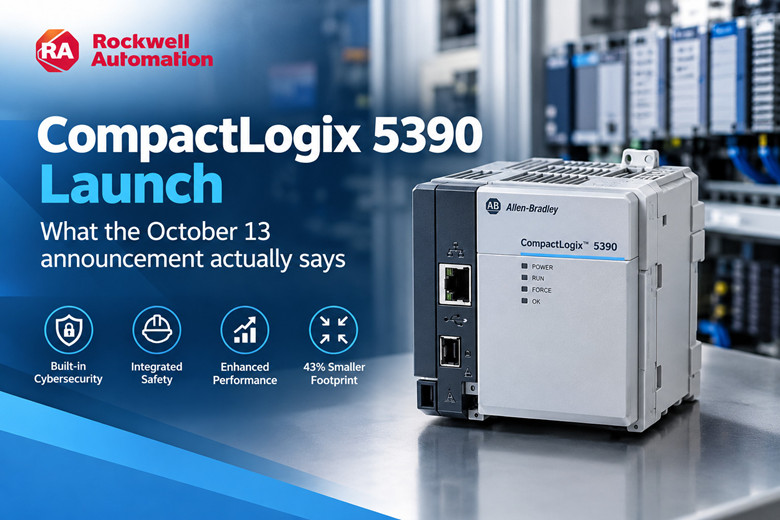
Rockwell Automation announced the CompactLogix 5390 controller in a press release dated October 13, 2026, issued from Milwaukee through PR Newswire. The document introduces the CompactLogix 5390 as the latest advancement in the company's Integrated Architecture controller family and states its purpose in one line: help machine builders and manufacturers optimize performance, security, safety, data and flexibility. It also makes one number public. The new controller has a footprint 43 percent smaller than previous CompactLogix 5380 controllers. That is the whole of the quantitative disclosure. Everything else in the release is capability language, a list of products the controller works with, and a quote from a product manager. For a buyer with budget authority, the useful work starts where the release stops. This analysis separates three things: what Rockwell stated, what those statements imply for a panel layout or a purchase order, and what nobody has published yet. The gaps are not a criticism of the announcement. They are the normal condition of a launch release, and they define the questions a distributor should be able to answer before anyone signs. What Rockwell announced on October 13 The release describes the 5390 as bringing together built-in cybersecurity, integrated safety and enhanced performance in a single control platform. Read that sentence the way a panel builder reads a bill of materials. Three functions that historically arrived as separate boxes are now offered inside one controller envelope, at least according to the marketing. Security gets a standard attached to it. Rockwell says the controller's capabilities are aligned to IEC 62443-4-2 and describes the product as ready for the EU Cyber Resilience Act. I/O gets a family name: support for local PointMax I/O, which the release says enables more modular architectures. The physical claim is the one that will end up in a quotation spreadsheet. Rockwell states the 5390 is 43 percent smaller than previous CompactLogix 5380 controllers and connects that reduction to two commercial outcomes, less panel space and more standardized designs across machine families. Compatibility is spelled out as a list rather than a diagram. The controller works inside the Rockwell Integrated Architecture ecosystem and integrates with PointMax I/O (5034), Kinetix motion, PowerFlex drives, Stratix networking, FactoryTalk Design Studio software and other visualization solutions. One quote carries the customer rationale. Siva Iyyamperumal, senior product manager at Rockwell Automation, said customers are being asked to do more than deliver performance and also have to address cybersecurity and safety requirements. The sentence is short and does a lot of framing work. It presents security and safety as buyer requirements that arrived from outside the machine, not as features Rockwell decided to add for their own sake. Table 1: What the October 13, 2026 Rockwell release states Item What the release says How to read the statement Product CompactLogix 5390 controller Named product, new launch Family Latest advancement in the Integrated Architecture controller family Positioning, no generation label Stated purpose Help machine builders and manufacturers optimize performance, security, safety, data and flexibility Positioning Core capability Built-in cybersecurity, integrated safety and enhanced performance in one platform Capability claim, no benchmarks Security standard Capabilities aligned to IEC 62443-4-2 Alignment, not a certificate number Regulation Described as ready for the EU Cyber Resilience Act Readiness claim, no declaration cited I/O Support for local PointMax I/O Capability claim, no module list Footprint 43 percent smaller than previous CompactLogix 5380 controllers The only numeric claim in the document Ecosystem PointMax I/O (5034), Kinetix motion, PowerFlex drives, Stratix networking, FactoryTalk Design Studio, visualization solutions Compatibility list without part numbers Commercial terms Not stated Absent from the release The date deserves a note of its own. October 13, 2026 is the manufacturer's own press release date, not a date assigned by a magazine, a distributor or a trade show. When this article refers to the announcement, it means the document Rockwell published that day and nothing later. The three claims that matter to a panel builder Most of the release is context. Three claims change decisions, and each one changes a different decision. The first is the footprint reduction. Panel space is the constraint that shows up last in a project and costs the most to fix. A controller that occupies 43 percent less footprint than the previous generation gives a designer room for terminal blocks, disconnects or a larger drive without changing the enclosure. Rockwell frames the benefit as standardization across machine families, which is the more valuable version of the claim. A single controller envelope that covers a range of machines means one panel layout, one set of drawings and one spare part held on a shelf. The second is security carried inside the controller rather than added beside it. For years, a machine that needed network security bought it as a separate appliance, an industrial firewall or a managed switch with filtering. Each of those devices needs its own panel space, its own power, its own firmware process and its own place in a support contract. A controller with security built in changes the architecture discussion, even if the release does not say what the built-in functions actually do. The third is the combination of safety and standard control on one platform. A machine with safety functions has usually needed either a dedicated safety controller or a safety-rated variant, and the split shows up in programming, wiring and validation. Rockwell's claim that integrated safety sits in the same platform as the control logic points toward a single project and a single tag database. It does not, on its own, tell an integrator what safety integrity level the product reaches. That figure is absent. Table 2: Claims in the release against evidence published so far Claim Release wording Verifiable today Still missing Smaller footprint 43 percent smaller than previous CompactLogix 5380 controllers The percentage itself, as a manufacturer claim Dimensions, mounting depth, weight Built-in cybersecurity Capabilities aligned to IEC 62443-4-2 The standard named, the alignment stated Certificate, assessed scope, security functions list CRA readiness Described as ready for the EU Cyber Resilience Act The claim exists in writing Declaration of conformity, timeline, covered products Integrated safety Integrated safety in a single control platform The phrase in the release Safety ratings, SIL or PL level, certified function set Enhanced performance Enhanced performance, no metric Nothing numeric Scan times, memory, task capacity, axis count Modular architecture Local PointMax I/O support The I/O family named Module list, channel counts, density, pricing Ecosystem fit Named integration with motion, drives, network, software The product families named Firmware version matrix, software release requirements Read the two columns together and the shape of the announcement becomes clear. Rockwell published the direction of travel with enough specificity to be quoted, and held back every figure an engineer would use to size a system. That is a deliberate sequencing choice, and it is common at launch. It also means the trade press, this article included, cannot yet write the sentence that buyers want most: what the thing costs and when it ships. Forty-three percent smaller: what it changes in a cabinet A footprint figure is an area figure. It describes the panel face the controller occupies, not the volume behind it, and the difference matters when a designer starts moving parts around. Consider how a typical compact control panel is organized. Wire duct runs horizontally across the back plate and eats usable area before any device is mounted. DIN rail sits between duct runs. Terminal blocks, breakers, relays and a power supply take the lower third. The controller occupies a slot near the top, and the space around it is reserved for cable bend radius and for the clearance a technician needs to land a screwdriver on a terminal. Reducing the controller's face area by 43 percent does not return 43 percent of the panel to the designer, because the clearance zones do not shrink at the same rate. What it does return is rail length and layout freedom. A narrower controller lets a designer keep a single horizontal rail for the control group instead of breaking the rail and adding a second tier. On a machine where the panel is already at its size limit, that can be the difference between keeping the enclosure and moving up a size, which changes the cutout in the machine frame, the door hardware, the cooling calculation and the shipping weight. Depth is the other half of the story, and the release says nothing about it. A controller that is smaller on the face but deeper behind the plate can collide with duct or with the back of a door-mounted HMI. Until dimension drawings appear, treat the percentage as a face-area claim and verify depth before committing a layout. Standardization is the commercial argument, and it is stronger than the space argument. A machine builder who runs four models on one panel architecture spends real money maintaining four sets of drawings, four spare-part lists and four sets of assembly instructions. If one controller covers the range, the bill of materials collapses toward a common core. The 43 percent figure makes that consolidation easier to justify internally, because the smaller envelope fits the smallest machine in the family without forcing a redesign of the largest. Field note: Do not resize an enclosure on the strength of a press release percentage. Panel thermal performance is driven by total watts dissipated inside the enclosure, not by the footprint of one component. A smaller controller with the same power loss puts the same heat into a smaller box, and the enclosure temperature rise can get worse. Confirm the watt figure and rerun the thermal calculation before you change the enclosure size or the filter arrangement. The claim that will decide most projects is not in the release at all. Buyers will want to know whether the 5390 fits an existing panel cutout pattern, whether the terminal arrangement is compatible with wiring already documented, and whether a machine built last year can take the new controller without redrawing the layout. None of those answers are published. PointMax I/O and the architecture around the controller Local PointMax I/O support is the least glamorous line in the release and possibly the most consequential for machine design. Local I/O means the slices sit on the controller's own backplane or rail rather than across a network, and that changes where the cabinet boundary falls. A distributed layout puts a network node in each zone of the machine. That is the right answer for a long line with stations spread over twenty meters, because it shortens home-run cable and lets a station be tested on its own. It is the wrong answer for a compact machine with a single enclosure, where every remote node adds a power supply, a network drop and a device that can fail. Local PointMax I/O points the design back toward the compact case. Slices stack next to the controller, wiring lands on the same rail, and the whole control group stays inside one enclosure. Rockwell's phrase for this is more modular architectures, which reads as an invitation to build a machine from a small set of repeated I/O blocks rather than a fixed channel count. The ecosystem list in the release is worth mapping before a project kickoff, because it describes the four interfaces a compact machine actually uses. Control layer CompactLogix 5390 controller (announced 2026-10-13) Local I/O PointMax I/O, 5034 family Motion Kinetix Drives PowerFlex Network Stratix Engineering FactoryTalk Design Studio Visualization Rockwell and third-party HMI options Not published Catalog numbers, memory, axis count, scan time, price A scope sequence that keeps a project honest, in the order the decisions actually get made: Fix the machine's I/O count and the number of motion axes on paper, before any part is selected. Decide which I/O must be local to the controller and which can sit on a remote drop, based on cable runs and test access. Confirm the drive and motion families the machine already uses, and check that the controller supports them in the software release you own. Confirm the network topology, including whether the machine needs managed switching for segmentation rather than an unmanaged block. Confirm the engineering software version required, and price the license and training impact if it is newer than what the shop runs. Only then ask for a quotation, with the I/O count and axis count attached so the distributor quotes a configured system rather than a headline part. Step three is where most compact machine projects lose time. A controller announcement describes a family, and a family supports a range of drives, but the specific pairing is governed by firmware and software versions that the release does not list. Rule of thumb: If a new controller requires a software version your maintenance team has not installed, budget the training and the first-project learning curve as part of the controller cost. On a single-machine order, engineering time usually exceeds the hardware delta. Cybersecurity wording: IEC 62443-4-2 and CRA readiness Two phrases in the release will be quoted more than any other, and both need parsing. IEC 62443-4-2 is the part of the IEC 62443 series that sets technical security requirements for industrial automation and control system components. It is written for the product, not for the plant. A vendor that meets it has documented and implemented a set of component-level requirements covering things like account management, integrity protection, confidentiality and event logging. Rockwell's wording is that the controller's capabilities are aligned to that standard. Aligned is not certified. A certificate naming the product and the assessed scope is a different document from a release sentence, and only the certificate tells a buyer which requirements were assessed and which were excluded. The EU Cyber Resilience Act is a horizontal regulation covering products with digital elements sold in the EU, and its main obligations phase in from December 2027. Readiness for that regulation is a forward-looking position, not a compliance finding. No product can hold a CRA declaration of conformity before the regime's obligations apply, which is why manufacturers are using the word ready rather than compliant. For a machine builder shipping into Europe, the practical question is not whether the controller is aligned. It is what evidence the builder can put in a technical file, and what obligations fall on the machine builder rather than the component supplier. Those obligations are split, and the split is exactly what a distributor should be able to explain. Warning: Treat aligned, ready and certified as three different words with three different meanings. If a quotation, a proposal or a customer specification requires a certified component, ask for the certificate and check that the product name and the assessed scope on it match what you are buying. A press release sentence is not a substitute, and a compliance officer will not accept one. The security claim also has a design consequence that the release does not spell out. Built-in security only helps if the machine's network architecture uses it. A controller with hardened functions behind an unmanaged switch on a flat network has the same exposure as before. Segmentation, account control and update policy are still engineering work, and they still belong in the project scope. What Rockwell did not publish This section exists because the absence of information is itself information, and because a buyer who assumes the missing details will be available at quotation time usually loses a week. The release contains no order or catalog numbers. It names product families, not purchasable items. A distributor cannot quote from the announcement, and a maintenance planner cannot add the controller to a spares list using the announcement. The release contains no memory figures, no axis counts, no scan times and no performance benchmarks of any kind. Enhanced performance is stated without a metric, a comparison or a test condition. Any article that prints a scan time for this controller at this point is guessing. The release contains no price. It contains no ship date and no availability window. It says nothing about distributor stock, first-allocation quantities or regional launch sequence. Buyers in the Middle East and Europe have no published indication of when the product reaches their channel. The release contains no end-of-sale date for the CompactLogix 5380. It does not describe the 5390 as a replacement, and it does not put a date on any transition. Anyone who tells you the 5380 stops being orderable on a particular date is repeating something Rockwell has not said. The release also omits the safety detail that a validation engineer needs: no safety integrity level, no performance level, no certified function list, no statement about which safety I/O families pair with the controller. None of this is unusual. A launch release is a positioning document written for a trade audience, and Rockwell published the parts that generate coverage. The technical publication, the firmware release notes and the price book come later, on their own schedule. Questions to ask a distributor before committing budget The release gives a distributor very little to work with, which makes the quality of the answers a useful test of the channel. Bring the I/O count and the axis count with you and ask the following. Table 3: Buyer questions for a distributor, and why each one matters Question Why it matters A useful answer looks like What is the order number for the configuration I need? The release has no catalog numbers, so the item cannot be quoted from the announcement A specific number from a current price book or configurator What is the ship date or availability window? No date was published, and a project schedule cannot absorb an open one A dated allocation or a written statement that none exists yet What is the price, including required software? Controller price alone understates the project if a software upgrade is needed Line-item pricing with license and support separated Which software version is required, and do I need to upgrade? Unpublished, and it drives training and validation cost A version number and a migration note What safety ratings apply, and which safety I/O pairs with it? The release states integrated safety without a rating Certified ratings and a compatible I/O list Is there a certificate for IEC 62443-4-2, and what scope does it cover? Aligned is not certified A certificate reference and the assessed product scope What is the firmware update and security advisory process? CRA readiness is a lifecycle position, not a one-time feature A published advisory channel and update policy What is the status of the 5380, in writing? No end-of-sale date was announced, and planning needs certainty A written statement of current lifecycle status Can I get dimensions and a thermal figure now? The 43 percent claim is a face-area figure A dimension drawing and a watt figure A checklist to take into the meeting: ☐ I/O count and axis count written down before the call ☐ Existing engineering software version confirmed ☐ Existing drive and motion families listed ☐ Enclosure dimensions and current thermal margin on hand ☐ Written confirmation of availability, price and software requirement ☐ Lifecycle status of the 5380 requested in writing, not verbally ☐ Safety rating and I/O pairing confirmed against a published document If a distributor cannot answer the first three items, the conversation is about a future product rather than a purchase. That is a legitimate conversation, but it belongs in a design review, not in a purchase order. Where the 5390 sits next to the 5380 in a live project Background first, because it explains why the comparison keeps coming up. The CompactLogix 5380, in the 5069 family, is the compact controller line that many panel builders specify today for machines in the mid range. Rockwell's Integrated Architecture includes Studio 5000 as the engineering environment that programs across the family. Neither of those statements is a specification, and this article does not offer one for either product. The 5390 arrives beside that installed base, not on top of it. The release says nothing about a replacement, a migration path or a date, and the 5380 remains the line that existing drawings, spare-part lists and maintenance procedures reference. For a new machine design, the 5390 is worth evaluating on the footprint and security claims alone, provided the missing figures arrive before the layout is frozen. For an existing machine that is already validated and shipping, changing the controller is a project with a validation cost that a smaller footprint rarely repays. For a builder running several machine models on one panel architecture, the standardization argument is the one that can justify the engineering hours. Spares strategy needs its own decision. A shop that holds one controller per machine family is exposed if a new family enters the mix before the old one leaves. Holding both is a cost, and the cost is smaller when the two share I/O and software, which is a question for the compatibility matrix rather than the release. Engineering labor is the line item buyers underestimate. A new controller in a plant means a software version decision, a programming standards review, a validation pass on safety functions and a training session for the people who will troubleshoot it at two in the morning. None of those costs appear on a quotation, and all of them land on the project. Bottom line: The CompactLogix 5390 is a credible direction with a thin public record. The footprint claim is specific enough to plan around once dimensions arrive. The security and safety claims are specific enough to start a compliance conversation, not to close one. No price, no ship date and no 5380 transition date have been published, so any budget built this month rests on assumptions that should be written down and dated. Dated timeline: what is confirmed and what is not A news analysis is only as useful as its separation of confirmed fact from expectation. The public record after the announcement is short enough to set out in full. 2026-10-13 CONFIRMED Press release issued from Milwaukee via PR Newswire 2026-10-13 CONFIRMED Product named: CompactLogix 5390 controller 2026-10-13 CONFIRMED Claim: 43 percent smaller footprint than the 5380 2026-10-13 CONFIRMED Claim: IEC 62443-4-2 alignment, CRA readiness wording 2026-10-13 CONFIRMED Claim: local PointMax I/O support Not stated UNKNOWN Order and catalog numbers Not stated UNKNOWN Memory, axis count, scan time, task performance Not stated UNKNOWN Price, currency and regional pricing Not stated UNKNOWN Ship date or availability window Not stated UNKNOWN Distributor stock and first allocation Not stated UNKNOWN End-of-sale or transition date for the 5380 The confirmed column is short, and it is still enough to act on. Designers can start a layout study. Compliance teams can open a question about certificates. Procurement can ask for a written availability position. Maintenance planners can note that a new family exists and resist the urge to standardize on it before the price book confirms it is orderable. The unknown column is where the risk sits, and it is not a small risk. A machine project that assumes an availability window and a price will either slip or absorb a change order. A panel layout that assumes a depth will be redrawn. A compliance file that cites a press release will be rejected. What the announcement does establish is direction. Rockwell is putting security and safety into the compact controller rather than selling them as adjacent products, and it is using panel space as the commercial argument for consolidation. Both moves point toward fewer boxes in a cabinet and a shorter bill of materials. Whether that direction reaches a given machine this year depends on documents Rockwell has not published. Until they appear, the correct posture is interest with a written list of open questions, and a quotation that names exactly which assumptions it rests on.
October 28,2026

*Notizie dal settore | 12 ottobre 2026*Rockwell Automation ha fissato il 31 ottobre 2026 come data di cessazione della produzione dell'adattatore FLEX I/O ControlNet, senza aver ancora annunciato un prodotto successore. I codici prodotto interessati sono 1794-ACN15, l'adattatore ControlNet standard, e 1794-ACNR15, la versione con supporti ridondanti.Ciò lascia all'azienda circa tre settimane di tempo, a partire da oggi, per effettuare un ultimo acquisto. Dopodiché, l'adattatore non sarà più presente nel catalogo Rockwell e l'unica possibilità di sostituirlo sarà quella di reperirlo presso i distributori e i fornitori indipendenti che ne hanno ancora in magazzino.Una linea di produzione bloccata non si preoccupa di quanto sia ingegnoso il piano di migrazione. Le interessa solo che l'adattatore sullo scaffale sia compatibile. Quindi la data del 31 ottobre non è una nota a piè di pagina tecnica, ma la scadenza di un ordine di acquisto, che arriverà tra tre settimane.Leggete attentamente il resto dell'immagine prima di decidere quanto prodotto acquistare. L'adattatore ControlNet è solo una parte di un più ampio ciclo di dismissione degli I/O FLEX e i tempi di consegna dei prodotti rimanenti vi indicano il margine di flessibilità effettivamente disponibile. La data che conta è il 31 ottobre.Il 31 ottobre è l'ultimo giorno in cui è possibile ordinare i modelli 1794-ACN15 e 1794-ACNR15 da Rockwell. La pagina del prodotto riporta lo stato del ciclo di vita "Fine vita" con tale data di cessazione, e la formulazione è sufficientemente chiara da non lasciare spazio a interpretazioni: "Rockwell Automation annuncia che a partire dal 31 ottobre 2026, l'adattatore Flex ControlNet non sarà più disponibile per la vendita. Si invitano i clienti a rimuovere i riferimenti al/ai prodotto/i interessato/i."Quest'ultima frase è quella che vale la pena leggere due volte. Rockwell vi sta dicendo di eliminare il codice del componente dai vostri disegni, dalle distinte base e dalle procedure di manutenzione. Non vi sta dicendo cosa metterci al suo posto.La categoria di sostituzione sulla pagina del prodotto è "Sostituzione ingegneristica". Si tratta di una dicitura specifica e poco utile per chiunque possieda questo hardware. Un ricambio funzionale si installa facilmente e svolge la stessa funzione. Una sostituzione ingegneristica, invece, significa che la funzione può ancora essere svolta, ma il design cambia e chi si occupa della progettazione non è lo stesso che gestisce il budget per la manutenzione.Non è indicato alcun codice ricambio sostitutivo. Questo è il dettaglio che dovrebbe guidare la vostra decisione di acquisto questo mese.Quando un fornitore propone un ricambio, è possibile pianificare di conseguenza. Si consulta la scheda tecnica, si verificano le dimensioni, si ordina un ricambio per il banco di prova e si scopre cosa si rompe. Quando invece il campo relativo al ricambio è vuoto, spetta al cliente redigere il piano di migrazione, senza che il fornitore indichi la strada da seguire.Per un impianto che continua a utilizzare il vecchio sistema ControlNet perché funziona e perché i finanziamenti sono stati approvati in un decennio diverso, questo è il momento in cui si pone il problema della piattaforma. O si acquistano scorte per prolungare la vita utile di ciò che si possiede, oppure si accetta che l'infrastruttura ControlNet ha un conto alla rovescia che non è stato definito.Il conto alla rovescia è reale, in ogni caso. Rockwell ha smesso di vendere. Ogni adattatore in circolazione è ora a un solo guasto di distanza dal diventare un problema che non si potrà risolvere con i soliti canali di assistenza.Cosa sta uscendo dalla produzione e cosa noIl ritiro dal mercato non riguarda tutti gli adattatori FLEX I/O contemporaneamente, e gli intervalli tra le date sono più importanti delle date stesse. Ecco l'elenco dei modelli, con la relativa definizione a scaffale.1794-ACN15, adattatore FLEX I/O ControlNet, supporto non ridondante. Stato del ciclo di vita: Fine vita. Interrotto il 31 ottobre 2026. Categoria di sostituzione: Sostituzione tecnica. Nessun successore designato.1794-ACNR15, adattatore FLEX I/O ControlNet con supporti ridondanti. Stato del ciclo di vita: Fine vita. Interrotto il 31 ottobre 2026. Categoria di sostituzione: Sostituzione tecnica. Nessun successore designato.1794-ACNR15XT, l'adattatore Flex XT ControlNet per ambienti con temperature estese. Stato del ciclo di vita: Fine vita. Prodotto fuori produzione dal 31 dicembre 2027. Nome del prodotto sostitutivo: 5094-AENTRXT.1794-AENT, adattatore FLEX EtherNet/IP con 10BaseT. Stato del ciclo di vita: Fine vita. Fuori produzione dal 30 settembre 2028. Categoria di sostituzione: Sostituzione funzionale. Nome del prodotto sostitutivo: 1794-AENTR.1794-AENTR, l'adattatore FLEX I/O a doppia porta EtherNet/IP. Stato del ciclo di vita: Attivo Maturo, il che significa che è ancora attuale. Rockwell indica un tempo di consegna stimato di 5 giorni.I due adattatori ControlNet vengono sostituiti per primi, e insieme. La variante XT, quella progettata per resistere a temperature estreme e ambienti sporchi, ottiene quattordici mesi di garanzia aggiuntivi e una destinazione specifica. L'adattatore EtherNet/IP ottiene quasi due anni di garanzia in più e una sostituzione completa e funzionale.Questo schema non è casuale. La piattaforma non viene dismessa in un colpo solo. Viene ritirata gradualmente da un protocollo di rete alla volta, e ControlNet è in cima alla lista.Se si utilizzano sia un adattatore ControlNet standard che un'unità XT nello stesso impianto, come spesso accade in siti con una combinazione di pannelli climatizzati e quadri elettrici per esterni o lavabili, i due dispositivi non sono sincronizzati. È importante non confondere le date di scadenza durante una discussione di budget. Gli utenti dell'unità XT hanno un successore designato e più tempo a disposizione. Gli utenti del ControlNet standard non godono di nessuno di questi vantaggi.La parte relativa a EtherNet/IP è quella che offre ancora una soluzione affidabile. Il modello 1794-AENTR è attivo e maturo e Rockwell garantisce un tempo di consegna di 5 giorni. Non si tratta di un componente che vi lascerà a piedi. È un componente che potete ordinare tramite i canali standard e ricevere entro la stessa settimana.Il motivo per cui questo è importante è che l'adattatore EtherNet/IP rappresenta la soluzione ideale se l'impianto abbandona ControlNet. Esiste, è facilmente reperibile e non è in fase di dismissione. Questa combinazione offre un'opzione, e quest'opzione è meno problematica del campo vuoto accanto alla parte relativa a ControlNet.Iniziamo col capire cosa fa effettivamente un adattatore FLEX I/O. Un singolo adattatore collega fino a otto moduli FLEX I/O alla rete. Lato ControlNet, questo traffico viene gestito tramite ControlNet V1.5. L'adattatore rappresenta il punto di connessione tra un rack di I/O e il controllore, o viceversa.Un solo adattatore, fino a otto moduli, una sola connessione di rete. Se quell'adattatore si guasta, non si perde un singolo punto di ingresso, ma l'intero rack.Questo è il numero da tenere a mente quando si decide quanti acquistarne. Il costo per adattatore non corrisponde al prezzo dell'adattatore stesso, bensì a tutto ciò che vi è collegato.Perché un preavviso di 73 giorni rende la situazione peggiore di quanto sembriLa pagina del prodotto 1794-ACN15 indica un tempo di consegna stimato di 73 giorni. Settecentotrenta ore di attesa, e questa è la stima di Rockwell per un componente che verrà ritirato dal mercato tra tre settimane.Pensateci un attimo. La data ultima per ordinare è tra circa tre settimane. I tempi di consegna sono di circa dieci settimane e mezza.Quei due numeri non coincidono, e questa discrepanza è il punto cruciale. Un ordine effettuato l'ultimo giorno di ottobre non arriva a ottobre. Arriva nella prima metà di gennaio, se la stima è corretta.Questa è la trappola di un acquisto dell'ultimo minuto. Le persone sentono "data ultima per l'ordine" e immaginano una scadenza precisa da cui partire per pianificare. In pratica, un acquisto dell'ultimo minuto è un impegno ad aspettare, e lo si fa prima di sapere come saranno i prossimi dodici mesi di insuccessi.Per chi si occupa di pianificazione della manutenzione, questo cambia completamente la natura della decisione. Non si tratta più di scegliere tra acquistare ora e acquistare in seguito allo stesso prezzo e con la stessa disponibilità. Si tratta piuttosto di scegliere tra assicurarsi le scorte con tempi di consegna noti e rischiare che nulla nel rack si guasti mentre il canale di distribuzione si sta chiudendo alle spalle.Un tempo di consegna di 73 giorni è anche un segnale sulla catena di approvvigionamento del componente. Tempi di consegna lunghi per hardware fuori produzione di solito significano che il componente viene prodotto su ordinazione, o prelevato da scorte in diminuzione, o soggetto a assegnazione. Nessuna di queste condizioni migliora dopo la data di cessazione della produzione. Anzi, peggiorano, poi i componenti scarseggiano, e infine l'unica scorta rimasta è quella già presente sugli scaffali.I 5 giorni di consegna dell'adattatore EtherNet/IP si trovano proprio accanto ai 73 giorni indicati nello stesso catalogo, e il contrasto è fondamentale. Uno è un componente che si può ordinare questo pomeriggio. L'altro è un componente per il quale è necessario un impegno di consegna con mesi di anticipo.In pratica, la lettura è semplice. La disponibilità dopo il 31 ottobre non è una questione di prezzo, ma di chi ha ancora il pezzo in magazzino. I distributori e i fornitori indipendenti rappresentano il canale di distribuzione, che si assottiglia di mese in mese.Se avete bisogno di un rack di importanza critica, i tempi di consegna sono un valido motivo per agire questo mese piuttosto che nella prima settimana di novembre. La differenza tra ordinare il 24 ottobre e ordinare il 3 novembre non è il tre percento di un ordine d'acquisto. È la differenza tra la catena di approvvigionamento di Rockwell e ciò che rimane sul mercato secondario.Se hai bisogno di aiuto per trovare i ricambi ancora disponibili, i ricambi Allen-Bradley fuori produzione sono un buon punto di partenza per la ricerca, ed è consigliabile farlo prima che scada l'ultima data di vendita piuttosto che dopo.Le due strade realistiche sono: mantenere la piattaforma o passare a EtherNet/IP.Una volta che l'adattatore non è più disponibile nel catalogo, l'impianto ha solo due opzioni valide. Tutto il resto è una variante di una di esse.La prima strada consiste nel mantenere la piattaforma esistente. Si acquistano adattatori a sufficienza per supportare i rack ControlNet per tutto il periodo di tempo previsto, li si conserva correttamente e si continua a utilizzare il sistema. Questa soluzione non richiede un progetto di investimento, la sostituzione del controller o un periodo di fermo impianto. Richiede solo un ordine di acquisto e uno spazio a disposizione.Il costo di questa soluzione è rappresentato dallo scaffale stesso. Gli adattatori che rimangono inutilizzati per anni non consumano energia e non hanno costi di stoccaggio, ma immobilizzano capitale circolante, devono essere conservati in un luogo asciutto e stabile e qualcuno deve tenerne traccia. Il vantaggio è che un guasto il martedì pomeriggio si risolve con una semplice sostituzione in quindici minuti, anziché con un evento che coinvolge la produzione.La seconda strada consiste nel passare a EtherNet/IP. In questo caso, l'impianto smette di considerare ControlNet come una soluzione permanente e inizia a vederla come un progetto. Il modello 1794-AENTR esiste, è in fase di sviluppo avanzato, sarà disponibile tra circa 5 giorni ed è l'adattatore verso cui si sta orientando la piattaforma FLEX I/O.Il passaggio a una nuova configurazione non si limita alla semplice sostituzione dell'adattatore. Il controller deve utilizzare lo stesso protocollo, la struttura di rete e l'indirizzamento devono cambiare, e il personale addetto alla manutenzione del sistema deve imparare a utilizzare strumenti diversi. Ecco perché si tratta di un progetto e non di un semplice ordine di acquisto.È importante chiarire l'entità del divario. ControlNet V1.5 ed EtherNet/IP sono reti diverse, con cablaggi differenti, regole di topologia diverse e strumenti di diagnostica differenti. La migrazione di un rack non si effettua semplicemente sostituendo una scheda. Il rack deve essere riconfigurato su una rete che il resto del sistema di controllo potrebbe già utilizzare o meno.Per alcuni impianti, questo lavoro è già in corso. Qualsiasi sito che abbia modernizzato il proprio livello di controllo negli ultimi dieci anni probabilmente dispone di una dorsale EtherNet/IP da qualche parte, e i rack FLEX sono l'ultimo anello di ControlNet ancora connesso. Per questi siti, la dismissione rappresenta solo un piccolo rinvio, non una crisi.Per altri impianti, i rack FLEX I/O ControlNet rappresentano la spina dorsale. Sono stati installati in quanto considerati la soluzione intelligente e flessibile del momento, e il resto dell'impianto si è sviluppato attorno ad essi. Per questi siti, la seconda strada consiste in un vero e proprio investimento di capitale, mentre la prima è quella che permette di mantenere l'impianto in funzione durante tale valutazione.La soluzione più pratica per la maggior parte delle operazioni è una via di mezzo. Acquistate le scorte di magazzino per gli adattatori che supportano i rack che non potete permettervi di fermare e avviate i lavori di progettazione per spostare i rack meno critici o che sono già prossimi a un'interruzione programmata.L'unica cosa che questa miscela non è, è gratuita. Ogni mese che passi a decidere è un mese in cui la finestra temporale per l'ultimo acquisto si accorcia, e il prezzo e la disponibilità di ciò che resta sul mercato dell'usato sono in continuo movimento.Se stai valutando entrambe le opzioni, i ricambi Rockwell Automation rappresentano un utile punto di riferimento per capire cosa viene ancora reperito e fornito sul mercato dei ricambi, consentendoti di confrontare i costi dei ricambi a magazzino con quelli dei ricambi necessari per il progetto.Quanto costa effettivamente all'azienda un guasto imprevisto dell'adattatoreÈ qui che le persone chiedono una cifra, ed è qui che un articolo serio si rifiuta di fornirla. Il costo dei tempi di inattività dipende interamente dall'impianto, e qualsiasi cifra singola citata in questo contesto sarebbe inventata, errata per il vostro sito e inutile come dato di partenza per la pianificazione del budget.Ecco come creare il tuo numero personalizzato.Partite dalla velocità di produzione della vostra linea o dalla produttività del vostro prodotto, qualunque sia l'unità di misura che già utilizzate per monitorare la produzione. Moltiplicate per il valore di tale produzione. Questo vi darà il costo di un'ora di inattività.Ora aggiungete il costo della manodopera che rimane inattiva mentre la linea è ferma. Aggiungete il costo di riavvio, che per alcuni processi si traduce in veri e propri scarti, mentre per altri in ore di riscaldamento e riqualificazione. Aggiungete gli straordinari se recuperate il volume perso con turni aggiuntivi.Il risultato è il costo per ora di fermo. Questo è il dato che conta per prendere la decisione, ed è un dato che solo tu puoi calcolare.Quindi fate i calcoli che contano. Se l'adattatore è disponibile, il guasto vi costerà una sostituzione: chiamate l'elettricista, spegnete il rack, cambiate la scheda, riaccendete, verificate. Un paio d'ore al massimo, spesso anche meno.Se l'adattatore non è disponibile, il tempo continua a scorrere. Chiami i tuoi fornitori, scopri che nessuno ne ha in magazzino e aspetti. Ora aggiungi i costi di spedizione per una consegna rapida e il sovrapprezzo che un componente raro impone quando il venditore sa che ne hai bisogno subito.Quel lasso di tempo tra una sostituzione e l'attesa è la giustificazione principale per tenere dei pezzi di ricambio. Ed è anche il dato che fa sembrare economico uno scaffale pieno di adattatori.I 73 giorni di tempo di consegna previsti per il codice 1794-ACN15 trasformano un normale ordine di fornitura in un evento di produzione. Un componente che normalmente si acquista la settimana successiva, dopo il 31 ottobre potrebbe non essere più disponibile al prezzo o con la rapidità a cui si è abituati.C'è un secondo costo che è facile dimenticare. Un rack che ha perso l'adattatore perde anche fino a otto moduli I/O, rendendoli inutilizzabili. Se questi moduli alimentano un interblocco di sicurezza, una ricetta di produzione o una misurazione di qualità, una "riparazione elettrica di due ore" può trasformarsi in un lotto da scartare o in un blocco di qualità che dura molto più a lungo della riparazione stessa.Ecco perché la questione dei pezzi di ricambio non riguarda mai veramente l'adattatore. Riguarda il rack, e il rack riguarda tutto ciò che l'impianto fa con i segnali.Se non avete mai calcolato i costi derivanti dai tempi di inattività del vostro sito, fatelo ora, finché il pezzo di ricambio è ancora acquistabile. È molto più facile giustificare un acquisto di magazzino con una cifra reale su un foglio di calcolo piuttosto che con la semplice sensazione che avere pezzi di ricambio sia una buona idea.Per gli impianti che mantengono in vita piattaforme obsolete, l'hardware PLC legacy rappresenta spesso la fonte più pratica per reperire i componenti che il fornitore originale non vende più, e conoscere la propria fonte prima che si verifichi un guasto è parte integrante di questa valutazione.Un controllo dei pezzi di ricambio che puoi effettuare questa settimanaSi tratta di un'attività da svolgere sul campo e non richiede un codice di progetto. L'obiettivo è un singolo dato oggettivo: da quanti adattatori 1794-ACN15 e 1794-ACNR15 dipende effettivamente il vostro sito.Iniziate dal pannello. Elencate tutti i rack FLEX I/O dotati di adattatore ControlNet. Per ciascuno, annotate il nome del pannello, il processo che gestisce e se il processo è critico o può attendere. Non tralasciate i rack più difficili da raggiungere, situati in angoli remoti dell'impianto; sono proprio questi i rack che più facilmente vengono dimenticati in fase di pianificazione e i più difficili da raggiungere in caso di guasto.Ora contate gli adattatori. Annotate se ognuno è un 1794-ACN15 o un 1794-ACNR15. Se il vostro sito utilizza supporti ridondanti, il conteggio degli ACNR15 è quello da tenere d'occhio, perché entrambe le versioni hanno la stessa data di cessazione della produzione, il 31 ottobre, e nessuna delle due ha un successore designato.Innanzitutto, prima di controllare quello degli altri, controllate il vostro magazzino. Alcuni negozi hanno ancora in magazzino adattatori acquistati anni fa e mai registrati. Un inventario è un'informazione gratuita e può cambiare completamente il vostro piano di acquisti in un pomeriggio.Poi confronta ciò di cui hai bisogno con ciò che possiedi. La differenza tra queste due cifre rappresenta ciò che acquisterai questo mese.Durante il processo, annotate i guasti. Se un adattatore si è guastato negli ultimi due anni, scrivete il motivo. Un adattatore non si guasta mai isolatamente. Calore, vibrazioni, alimentazione elettrica instabile e connessioni del backplane allentate contribuiscono al suo deterioramento, e un rack con una storia di guasti continuerà a guastarsi anche dopo la chiusura del catalogo. I rack con una storia di guasti senza problemi sono i candidati migliori per un piano di migrazione più lungo.Altri due elementi vanno aggiunti al foglio di controllo.Innanzitutto, elencate separatamente i rack XT. Il modello 1794-ACNR15XT è valido fino al 31 dicembre 2027 e ha un sostituto specifico, il modello 5094-AENTRXT; si tratta quindi di una voce diversa con un'urgenza differente. Includerlo nel conteggio standard di ControlNet potrebbe sovrastimare o sottostimare il rischio.In secondo luogo, annotate chi è responsabile della decisione. Ogni acquisto dell'ultimo minuto che si blocca è perché il reparto manutenzione vuole le scorte, il reparto finanziario vuole la giustificazione e nessuno ha annotato chi firma l'ordine di acquisto. Risolvete questo problema entro l'ultima settimana di ottobre.Una volta completata la scheda di controllo, la decisione di acquisto si basa su un calcolo matematico, non su un'opinione. Sapete quanti rack avete, quanti adattatori possedete e per quanti mesi di copertura avete bisogno. Moltiplicate la differenza per il costo unitario, confrontatela con i vostri costi di fermo macchina e la conversazione con l'ufficio finanziario sarà praticamente automatica.Effettuate la verifica contabile questa settimana, anche se la risposta è "abbiamo già abbastanza". La verifica contabile costa poco. Scoprire di avere delle carenze, invece, costa caro.Se la tua verifica evidenzia delle lacune che devi colmare rapidamente, i ricambi per l'automazione industriale sono il tipo di fornitore da tenere a portata di mano prima della scadenza, non dopo.Il resto del quadro del ciclo di vita di FLEX I/OAllarghiamo lo sguardo, perché l'adattatore ControlNet non è l'unica data sul calendario, e un impianto che reagisce solo a questa data dovrà ripetere la stessa operazione tra un anno.Ecco la sequenza, nell'ordine in cui si presenta.31 ottobre 2026: gli adattatori ControlNet FLEX I/O 1794-ACN15 e 1794-ACNR15 sono fuori produzione. Sostituzione tecnica, nessun successore designato.31 dicembre 2027: l'adattatore Flex XT ControlNet 1794-ACNR15XT è fuori produzione. Il prodotto sostitutivo è denominato 5094-AENTRXT.30 settembre 2028: il modello 1794-AENT, l'adattatore FLEX EtherNet/IP con 10BaseT, è fuori produzione. Il prodotto sostitutivo funzionale è denominato 1794-AENTR.Ancora in produzione: 1794-AENTR, adattatore EtherNet/IP a doppia porta FLEX I/O, versione matura attiva, tempo di consegna stimato 5 giorni. Nessuna data di cessazione indicata.Si tratta di un progressivo ritiro graduale della famiglia di adattatori FLEX I/O, protocollo per protocollo. Prima ControlNet, in due fasi, con gli adattatori standard a fare da apripista e la variante XT a seguire quattordici mesi dopo. Poi l'adattatore EtherNet/IP più vecchio, la versione 10BaseT, per il quale è già stato individuato un sostituto funzionale e la cui dismissione è prevista tra due anni.La destinazione è coerente. Ogni adattatore dismesso punta, direttamente o in futuro, al lato EtherNet/IP della piattaforma. Il 5094-AENTRXT è il sostituto ufficiale dell'adattatore XT ControlNet. Il 1794-AENTR è il sostituto ufficiale del 1794-AENT. Il 1794-AENTR stesso rimane attivo e maturo, con spedizione prevista tra circa 5 giorni e senza data di ritiro annunciata.Lo schema indica la direzione che la piattaforma intende intraprendere. FLEX I/O rimane. ControlNet viene eliminato. EtherNet/IP è la soluzione prevista per i rack.Per un responsabile della manutenzione, questo schema è più utile di qualsiasi singolo codice articolo. Significa che il piano di migrazione che redigete oggi, che si concluda l'anno prossimo o tra cinque anni, ha una direzione ben precisa. Significa anche che il 1794-AENTR è il componente che dovete conoscere ora, perché rappresenta il futuro degli adattatori ed è l'unico componente di tutta questa famiglia che è ancora facile da reperire.Siate precisi su ciò che Rockwell ha annunciato e su ciò che non ha annunciato, perché l'imprecisione in questo caso ha un costo. Ciò che è documentato è l'interruzione delle vendite e le date sopra indicate. Rockwell non ha annunciato la fine delle riparazioni, la fine dell'assistenza o l'interruzione della fornitura di pezzi di ricambio attraverso i propri canali di assistenza. Non permettete a nessuno, durante la prossima riunione di pianificazione, di affermare il contrario.La cessazione della produzione ha un significato concreto: il componente non viene più venduto. La disponibilità dipende quindi dalle scorte esistenti. E più ci si allontana dal 31 ottobre, più le scorte si riducono e più il prezzo viene determinato dal mercato secondario.Questo è il motivo principale per cui la data va considerata come la scadenza di un ordine di acquisto. Non è il giorno in cui il componente muore, ma il giorno in cui smette di essere un ordine e inizia a essere una ricerca.Tre settimane non sono molte, ma sono sufficienti per effettuare l'audit, contare le scorte e inoltrare l'ordine, finché il componente è ancora solo un codice articolo in un catalogo e non una richiesta di informazioni a un fornitore. Gli stabilimenti che usciranno indenni da questa situazione saranno quelli che trascorreranno la prossima settimana in officina con un blocco appunti, non quelli che passeranno la prima settimana di novembre al telefono.Il calendario è impostato. Il campo del successore è vuoto. L'unica variabile rimasta è quanti ne deciderai di mettere da parte.
October 13,2026
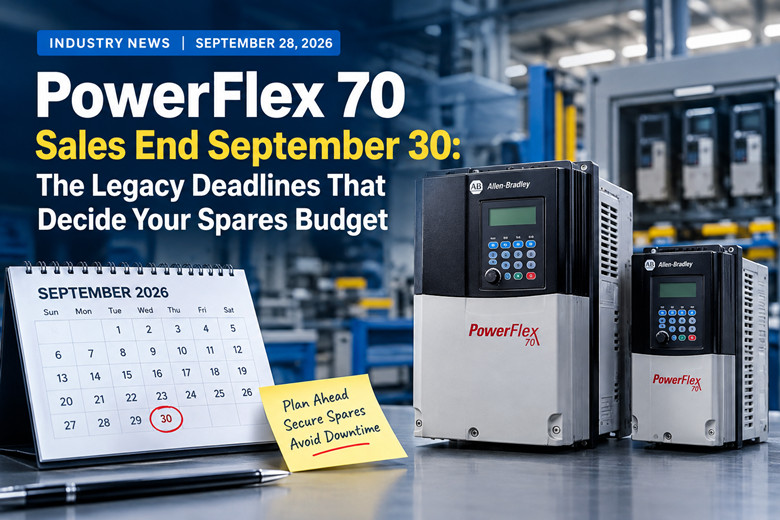
Mercoledì, Rockwell Automation interromperà la vendita dei nuovi azionamenti PowerFlex 70. Non di tutti, ma di quelli effettivamente installati nella maggior parte degli impianti. Se avete una linea di produzione che utilizza un PowerFlex 70 e non avete ancora deciso cosa fare in caso di guasto del prossimo azionamento, ora siete costretti a prendere questa decisione. Mancano due giorni.In quindici anni ho assistito a tre di queste transizioni. Lo schema è sempre lo stesso. Il fornitore annuncia, tutti annuiscono, nessuno fa un budget e diciotto mesi dopo un tecnico della manutenzione si ritrova al telefono alle 2 del mattino cercando di trovare un'unità ricondizionata da un intermediario che si rifiuta di rispondere alla domanda sulla provenienza. Ecco, questo è il conto che cerco di evitarvi di pagare.Questo non è un articolo tecnico. Sapete già a cosa serve un'unità disco. Qui si parla del costo del calendario, di quali componenti sono ancora disponibili e quando, e di cosa dovreste mettere da parte prima delle date importanti. Cosa termina esattamente il 30 settembre e cosa no Leggete attentamente l'annuncio, perché il titolo è fin troppo esplicito e sono i dettagli a determinare il vostro budget. La pagina del prodotto PowerFlex 70 di Rockwell afferma: "Rockwell Automation annuncia che l'azionamento CA PowerFlex 70 verrà dismesso e non sarà più disponibile per la vendita a partire dal 30 settembre 2026. Lo stato di fine vita e la data di dismissione si applicano solo alle versioni IP20/NEMA UL Tipo 1, IP54/NEMA UL Tipo 12 e Flange. Le versioni NEMA 4X rimangono in stato Active Mature. Per agevolare la transizione, consigliamo di modernizzare il sistema con la famiglia di azionamenti CA PowerFlex 750."Questa è la terminologia del fornitore, non la mia. Ci sono due cose importanti.Innanzitutto, le versioni NEMA 4X rimangono in fase di produzione avanzata. Se le vostre installazioni per lavaggi o per esterni utilizzano custodie 4X, manterrete per ora un canale di vendita. La fase di produzione avanzata non è la stessa cosa della fase di produzione attiva e non è una promessa di durata illimitata, ma non rappresenta nemmeno una data di scadenza. Non includete le vostre unità 4X nel resto del parco macchine quando effettuate l'audit. Rischiate di spendere più del dovuto per componenti che potete ancora ordinare normalmente.In secondo luogo, il blocco si applica a specifiche famiglie di contenitori e Rockwell indirizza gli utenti al suo strumento di ricerca sullo stato del ciclo di vita del prodotto per verificare i singoli numeri di catalogo. Non si tratta di una formalità. Un'azienda con quaranta targhette PowerFlex 70 su un foglio di calcolo pensa di avere quaranta problemi. In pratica, la combinazione di telai, contenitori e schede opzionali significa che ci sono forse sei o otto numeri di catalogo distinti che contano davvero, e alcuni di essi si trovano in uno stato del ciclo di vita diverso dagli altri. Recuperate i numeri. Leggeteli uno alla volta. Non fidatevi del nome della famiglia.L'altra metà di questo ciclo di notizie riguarda Mitsubishi Electric, dove le scadenze sono più lunghe ma i dettagli sono più precisi. Due bollettini di vendita e assistenza, entrambi emessi nell'aprile 2026 e rivisti nell'agosto 2026, entrambi relativi alla difficoltà di reperire i componenti, riguardano i servomotori CA della serie HF-KN (Bollettino n. 26-07AE) e gli amplificatori servo CA della serie MR-JN (Bollettino n. 26-06AE).Il servomotore HF-KN è presente sul mercato da 17 anni, dal 2009. Si tratta di un periodo considerevole per un servomotore, il che significa che la sua base installata nei settori dell'imballaggio, della lavorazione alimentare e delle linee di assemblaggio leggero è ampia. Il bollettino stabilisce una transizione alla produzione su ordinazione a partire dal 31 marzo 2027, l'accettazione degli ordini fino al 31 marzo 2028, l'ultima spedizione e la fine della produzione il 31 marzo 2029 e l'accettazione delle riparazioni e la fornitura di ricambi fino al 31 marzo 2036.Un terzo bollettino, il n. 26-09AE, riguarda la scheda Simple Motion MR-EM340GF e il kit di sviluppo software EM MELSOFT SW1DND-EMSDK-B. Stesse date. Maggiori dettagli a breve, perché il componente di ricambio è quello più complicato. Il calendario, nell'ordine in cui ti colpirà Ecco la sequenza. Nessuna tabella, solo le date nell'ordine in cui arrivano, perché è così che si crea un programma di ordini di acquisto.· 30 settembre 2026: termineranno le vendite del nuovo PowerFlex 70 per le versioni IP20/NEMA UL Tipo 1, IP54/NEMA UL Tipo 12 e con flangia. Tra due giorni. Se avete bisogno di una nuova unità in uno di questi involucri, questa è l'ultima settimana lavorativa completa e sta per terminare.· Dicembre 2026: la serie di PLC FX3G raggiunge la sua data di cessazione della produzione, in seguito all'annuncio di Mitsubishi del giugno 2025 che fissava a giugno 2026 la data ultima per gli ordini, con l'FX5UJ come successore consigliato. Chi ha perso tale data d'ordine si ritrova ora a dover cercare sul mercato secondario l'hardware FX3G. È importante sottolineare questo caso, poiché rappresenta l'esempio emblematico dell'intero articolo: l'annuncio è arrivato diciotto mesi prima, la data ultima per gli ordini è passata inosservata a giugno e la data di cessazione della produzione arriva a dicembre senza che nessuno se ne accorgesse.· 31 marzo 2027: i servomotori HF-KN, gli amplificatori servo MR-JN e la scheda di controllo del movimento MR-EM340GF con il relativo SDK passano alla produzione su ordinazione. Questo rappresenta il primo vero punto critico. La produzione su ordinazione implica tempi di consegna più lunghi e il fornitore produce in base alla domanda, non per il magazzino. Se avete un progetto che entrerà in funzione alla fine del 2027, tale data è un elemento critico, che il vostro responsabile di progetto ne sia consapevole o meno.· Aprile 2027: la rimozione delle marcature CE e UKCA entrerà in vigore per gli ordini ricevuti a partire da tale data, per gli stessi tre gruppi di prodotti Mitsubishi. Si tratta di una scadenza di tipo diverso, a cui dedicherò una sezione a parte più avanti.· 31 marzo 2028: chiusura degli ordini per HF-KN, MR-JN e MR-EM340GF. Dopo questa data non sarà più possibile effettuare ordini. Questa è la data limite per l'acquisto definitivo. Tutto ciò che avviene prima di tale data è solo pianificazione. Dopo, si tratta di acquistare da un altro produttore.· 31 marzo 2029: ultima spedizione e fine della produzione per i modelli HF-KN, MR-JN e MR-EM340GF. Tutti gli ordini effettuati entro marzo 2028 verranno spediti entro tale data, dopodiché la produzione cesserà.· 31 marzo 2036: termine dell'accettazione delle riparazioni e della fornitura di ricambi per gli stessi gruppi di prodotti Mitsubishi. Sette anni di garanzia per le riparazioni dopo la fine della produzione. Un periodo generoso rispetto a quello offerto dalla maggior parte delle linee di trasmissione, ed è l'informazione più importante di questo articolo per chiunque sia preoccupato per una possibile data di cessazione della produzione nel 2029.Rileggete quell'elenco e notate cosa manca. Rockwell ha pubblicato la data di fine vendita per il PowerFlex 70. Rockwell non ha pubblicato, in base alle informazioni che ho trovato, la data di fine riparazione, fine supporto o fine fornitura di pezzi di ricambio per lo stesso azionamento. Non ho intenzione di inventarmene una, e dovreste diffidare di qualsiasi fornitore che vi comunichi una finestra di riparazione Rockwell che il produttore non ha dichiarato. L'assenza di una data non è una garanzia. È semplicemente l'assenza di una data. Pianificate di conseguenza. Perché aprile 2027 non è come le altre date Ogni altra data su quel calendario riguarda i volumi: posso ordinarlo, verrà spedito, può essere riparato. Aprile 2027 riguarda la burocrazia, e la scadenza burocratica coglie di sorpresa gli stabilimenti europei e del Regno Unito.Entrambi i bollettini HF-KN e MR-JN affermano, con le parole stesse di Mitsubishi Electric: "La marcatura CE verrà rimossa dalla [serie] perché non è conforme al Cyber Resilience Act (CRA) dell'UE. Contestualmente alla rimozione della marcatura CE, verrà rimossa anche la marcatura UKCA. Gli ordini ricevuti da Mitsubishi Electric a partire da aprile 2027 saranno evasi senza marcatura CE e marcatura UKCA."Riporto quanto dichiarato dal fornitore. Non intendo discutere l'interpretazione legale, perché questo è compito del vostro ufficio conformità, non di un addetto agli acquisti di ricambi alle 6 del mattino di lunedì. Quello che vi dirò è la conseguenza pratica, che è una conseguenza di natura commerciale, non tecnica.Se il vostro stabilimento si trova nell'UE o nel Regno Unito e la documentazione dei vostri macchinari fa riferimento a componenti con marchio CE o UKCA, un ordine effettuato nell'aprile 2027 arriva con una targhetta di identificazione diversa da quella presente nei vostri disegni. Dovrete affrontare la questione con il vostro responsabile qualità, con l'organismo notificato (se presente) e con l'eventuale responsabile degli audit del cliente. Non è certo una conversazione che vorreste affrontare per la prima volta proprio nella settimana in cui vi serve il componente.Il rischio aumenta, e i bollettini lo specificano chiaramente: sia la vecchia che la nuova versione potrebbero essere in distribuzione contemporaneamente, a seconda della disponibilità a magazzino. Ciò significa che un distributore con scorte della vecchia versione contrassegnata e un distributore con scorte della nuova versione non contrassegnate potrebbero entrambi proporvi lo stesso codice articolo nello stesso giorno, ma la marcatura sulla targhetta potrebbe essere diversa. Se avete bisogno di una marcatura specifica, dovete indicarla nell'ordine di acquisto e confermarla al ricevimento della merce. Non date nulla per scontato basandovi solo sul codice articolo.Per uno stabilimento in Medio Oriente o nelle Americhe, questo aspetto è meno rilevante, sebbene diventi importante se si esportano macchinari in Europa o se il proprio produttore OEM utilizza la documentazione europea. Inoltre, influisce sul valore di rivendita di qualsiasi prodotto venduto successivamente nell'UE. È fondamentale capire a quale dei tre target di riferimento si applica prima di decidere quanto la scadenza di aprile 2027 rappresenti un problema.Il modello MR-EM340GF presenta un ulteriore problema. Mitsubishi dichiara che i componenti sostitutivi consigliati, ovvero il software di controllo del movimento SWM-G o la scheda di controllo del movimento MR-EM441G, non sono compatibili con l'MR-EM340GF e differiscono nelle specifiche. Questa è la dichiarazione del fornitore, ed è quanto di più chiaro si possa ottenere da un fornitore. Non è possibile effettuare una sostituzione diretta. L'SDK sostitutivo è SW1DND-EMMSDK-B e il bollettino fa riferimento al documento Mitsubishi n. 26-21E, intitolato "Modifiche alle etichette di imballaggio e alle targhette di identificazione a seguito dell'applicazione del Cyber Resilience Act dell'UE". Se si utilizza un MR-EM340GF, il componente non è un acquisto a magazzino. Si tratta di un progetto di migrazione che richiede un proprio impegno in termini di ore di lavoro ingegneristiche e deve essere incluso nel piano di investimenti, non nel budget dei materiali di consumo. Quanto costa e quanto non costa Permettetemi di separare la paura dal conto, perché le due cose non sono la stessa cosa.Il timore è che il 30 settembre significhi che la vostra flotta di PowerFlex 70 sarà abbandonata e che ogni guasto rappresenterà un arresto della linea di produzione. Non è questo che dice l'annuncio. La fine delle vendite non coincide con la fine dell'assistenza. Rockwell smetterà di vendere nuove unità in tre famiglie di chassis. Non ha annunciato una data di interruzione per le riparazioni. I vostri azionamenti esistenti continueranno a funzionare e la base installata è sufficientemente ampia da garantire al mercato delle riparazioni e della rigenerazione di terze parti un servizio sufficiente per anni. ricambi per unità legacyLa questione pratica non è se i pezzi esistano, ma chi li possiede e in che condizioni si trovino.Anche in casa Mitsubishi la preoccupazione è la stessa, e il costo è inferiore a quanto si pensi. Il periodo utile per le riparazioni si estende fino al 31 marzo 2036, ovvero sette anni dopo la fine della produzione. La maggior parte degli impianti sarà migrata da HF-KN e MR-JN molto prima, perché le linee di sostituzione esistono e sono documentate: da HF-KN053(B) a HK-KT053W(B), da HF-KN13(B) a HK-KT13W(B), da HF-KN23(B) a HK-KT23W(B), da HF-KN43(B) a HK-KT43W(B), da HF-KN73(B) a HK-KT7M3W(B) sul lato motore e da MR-JN-10A a MR-J5-10A, da MR-JN-10A1 a MR-J5-10A, da MR-JN-20A a MR-J5-20A, da MR-JN-20A1 a MR-J5-20A, da MR-JN-40A a MR-J5-40A sul lato amplificatore. Se la vostra architettura utilizza un MR-JN-10A1 o un MR-JN-20A1 con un ingresso monofase a 100 V CA, tenete presente che Mitsubishi richiede il convertitore semplice MR-CM08K1 in combinazione. Questo è un dettaglio che spesso viene trascurato nei preventivi per la sostituzione.I bollettini Mitsubishi aggiungono un'avvertenza onesta che vale la pena leggere due volte: le riparazioni potrebbero non essere possibili una volta esaurite le scorte dei componenti. Quindi la finestra temporale per la riparazione è massima, non garantita. Chiunque vi dica che il 2036 è una data certa non ha letto oltre la data.Resta quindi la vera variabile, che non è il venditore, bensì il mercato secondario.Una volta conclusi gli ordini, ogni componente acquistato proviene dallo scaffale di qualcuno. Condizioni e provenienza diventano i fattori decisivi, e questi non compaiono in una scheda tecnica. Un MR-JN ricondizionato, testato su un banco di carico e con una documentazione di riparazione, è un bene diverso da un'unità prelevata da un quadro dismesso e semplicemente pulita. Entrambi possono essere offerti allo stesso prezzo. Solo uno dei due è adatto a una linea critica. Il modo per controllare questo aspetto è conoscere le procedure di collaudo del fornitore prima dell'emergenza, conservare i numeri di serie delle proprie unità per poter tracciare quelle rientrate dalla riparazione e decidere in anticipo quali delle proprie linee possono tollerare un'unità usata e quali no.Per una pianta, componenti per servomotori Acquistare pezzi di ricambio sul mercato secondario è una soluzione legittima ed economica, a condizione che il fornitore effettui i test, documenti e fornisca le garanzie necessarie. Nel momento in cui un fornitore non è in grado di descrivere i controlli effettuati in entrata, il prezzo smette di essere il fattore determinante. Le decisioni che questo impone in questo trimestre Hai una lista breve e una lista lunga. Completa la lista breve nei prossimi novanta giorni, prima che la data di marzo 2027 inizi a far aumentare i tempi di consegna.1. Eseguite un inventario dei pezzi di ricambio confrontandoli con le unità effettivamente installate. Fate un giro per l'officina, recuperate ogni targhetta identificativa e annotate il numero di catalogo, il numero di serie, il tipo di chassis e la data di installazione. Questo è il passaggio che tutti saltano, ma è quello che permette di risparmiare di più. Troverete unità a stato solido sugli scaffali che appartengono a linee dismesse nel 2019 e linee con hardware in funzione per cui nessuno ha pezzi di ricambio.2. Crea un elenco pulito dei codici prodotto, una riga per ogni codice distinto, indicando la quantità installata e la quantità disponibile a magazzino. Per quanto riguarda PowerFlex 70, ordina l'elenco per famiglia di contenitori e verifica ogni codice con lo strumento Product Lifecycle Status di Rockwell, anziché presumere che lo stato della famiglia sia applicabile. Per quanto riguarda Mitsubishi, separa i tre gruppi: HF-KN, MR-JN, MR-EM340GF.3. Stabilite una data di acquisto delle scorte legata alla scadenza reale, non a quella temuta. Per Rockwell, tale data è oggi, per le unità IP20, IP54 e Flange che utilizzate ancora. Per Mitsubishi, la data limite per l'accettazione degli ordini è il 31 marzo 2028, e il passaggio alla produzione su ordinazione, previsto per il 31 marzo 2027, segna l'inizio di tempi di consegna più lunghi. Qualsiasi prodotto intendiate acquistare nuovo, fatelo prima di marzo 2027 o accettate i tempi di consegna.4. Avviate la procedura di migrazione per il piano di investimenti, non per le emergenze. Una procedura di migrazione è un documento di una pagina che indica il numero di unità, il codice del componente sostitutivo, le modifiche al quadro elettrico, le ore di ingegneria necessarie e le perdite che l'impianto subirebbe se non venisse effettuata. Per il modello MR-EM340GF, tale documento è obbligatorio perché il componente sostitutivo non è esplicitamente compatibile. Per il modello PowerFlex 70, Rockwell raccomanda la famiglia PowerFlex 750, quindi la procedura è da considerarsi un ammodernamento, e gli ammodernamenti vanno inseriti nel budget del prossimo anno, non nel fondo di emergenza di questo mese.5. Informa il tuo referente per la qualità o la conformità in merito alla modifica della marcatura prevista per aprile 2027, prima che si verifichi un problema con la merce in entrata. Si tratta di una conversazione di quindici minuti oggi, che potrebbe causare un blocco della spedizione in futuro.Quell'elenco è volutamente breve. Non migrerete quaranta unità in questo trimestre, e non dovreste nemmeno provarci. Saprete cosa avete, acquisterete i componenti che verranno sostituiti per primi e metterete il resto su un percorso documentato. Dove si inserisce un fornitore di pezzi di ricambio Non pretendo di fingere che un fornitore di componenti risolva un problema relativo all'intero ciclo di vita del prodotto. Non lo facciamo. Un buon fornitore, invece, si occupa di questioni più specifiche e utili: tiene a magazzino i pezzi che state per perdere, può dirvi quali unità ha testato e come, e non sparisce proprio nella settimana in cui avete bisogno del componente.Ecco cosa dovresti chiedere a qualsiasi fornitore che ti propone hardware fuori produzione, e chiedilo prima di averne bisogno:Eseguono dei test, e su cosa? Un test di carico su un azionamento e un test di funzionamento su un servo sono il minimo indispensabile. Chiedete la procedura.Sono in grado di risalire alla provenienza di un'unità usata o rigenerata? Se non riescono a descrivere la provenienza di un componente, l'unità deve essere considerata in condizioni sconosciute.Dispongono di scorte di sicurezza per i quantitativi che ti interessano, oppure si riforniscono su ordinazione? L'approvvigionamento su ordinazione significa che i tuoi tempi di consegna coincidono con i loro, che è esattamente il problema che stavi cercando di risolvere.Verrà confermata la marcatura sulla targhetta dati per i ricambi Mitsubishi dopo aprile 2027? Se avete bisogno della certificazione CE o UKCA, questa è la domanda che distingue un fornitore che ha compreso il cambiamento da uno che non ha letto il bollettino.La risposta onesta per la maggior parte degli impianti è un modello misto. Le linee critiche ricevono unità nuove o riparate dal fornitore. Le linee non critiche e i pezzi di ricambio a bassa frequenza provengono da scorte secondarie testate. Ricambi per l'automazione Selezionando gli ingredienti in questo modo, con test documentati, si evitano sempre interruzioni di produzione impreviste. Decidete il mix prima che sia il calendario a deciderlo per voi. FAQ Il 30 settembre 2026 significa che le mie unità PowerFlex 70 smetteranno di funzionare o non saranno più supportate? No. Significa che Rockwell smette di vendere nuove unità delle famiglie IP20/NEMA UL Tipo 1, IP54/NEMA UL Tipo 12 e Flange. Le unità installate continuano a funzionare. La documentazione ufficiale di Rockwell attesta la cessazione della vendita e rimanda gli utenti allo strumento "Product Lifecycle Status" per i singoli codici prodotto. Rockwell non pubblica una data limite per la riparazione o l'assistenza di questa unità e non si dovrebbe accettare alcuna affermazione del fornitore in tal senso. Il mio impianto utilizza unità PowerFlex 70 NEMA 4X. Sono interessato da questo problema? Non entro questa data. Rockwell afferma che le versioni NEMA 4X rimangono nello stato "Attivo Maturo". "Attivo Maturo" non è la stessa cosa di "Attivo", quindi tienilo d'occhio, ma non sei tra coloro che rientrano nella scadenza del 30 settembre. Qual è la data ultima per acquistare i motori HF-KN e gli amplificatori MR-JN? Secondo i bollettini Mitsubishi, l'accettazione degli ordini è valida fino al 31 marzo 2028, mentre l'ultima spedizione e la fine della produzione sono previste per il 31 marzo 2029. Il passaggio alla produzione su ordinazione avverrà prima, il 31 marzo 2027, quindi è bene considerare marzo 2027 come la data a partire dalla quale i tempi di consegna inizieranno a diventare sfavorevoli. La modifica della marcatura CE prevista per aprile 2027 è un motivo valido per smettere di utilizzare questi componenti? Questa è una decisione che spetta alla vostra funzione di conformità, non all'acquirente dei componenti. Mitsubishi Electric dichiara che la marcatura CE verrà rimossa perché la serie non è conforme al Cyber Resilience Act dell'UE, che verrà rimossa anche la marcatura UKCA e che gli ordini ricevuti a partire da aprile 2027 saranno evasi senza alcuna marcatura. Le implicazioni per la documentazione dei vostri macchinari dipendono dal vostro mercato e dalle esigenze dei vostri clienti. Posso acquistare il pezzo di ricambio e installarlo? Per quanto riguarda il motore e l'amplificatore, le linee di ricambio sono documentate (da HF-KN a HK-KT, da MR-JN a MR-J5) e sono presenti note sulle combinazioni, incluso il convertitore semplice MR-CM08K1 per determinate configurazioni monofase a 100 V CA. Per quanto riguarda l'MR-EM340GF, Mitsubishi dichiara esplicitamente che i ricambi consigliati non sono compatibili e differiscono nelle specifiche. Questo modello è un progetto di ingegneria, non una semplice sostituzione di componenti. Quanto tempo dovrei prevedere per il percorso di riparazione? I bollettini Mitsubishi stabiliscono che l'accettazione delle riparazioni e la fornitura dei ricambi per i modelli HF-KN, MR-JN e MR-EM340GF saranno garantite fino al 31 marzo 2036, con l'avvertenza che le riparazioni potrebbero non essere più possibili una volta esaurite le scorte dei componenti. Si consiglia di considerare la riparazione come una soluzione temporanea, non come una strategia definitiva. La data limite per gli ordini dell'FX3G è già stata superata. Cosa significa? Questo significa che gli avvisi sono accurati e le date sono reali. Mitsubishi ha annunciato l'interruzione della produzione dell'FX3G nel giugno 2025, fissando la data di cessazione a dicembre 2026 e la data dell'ultimo ordine a giugno 2026, con l'FX5UJ come successore. La data dell'ultimo ordine è passata. Se non avete seguito la vicenda, ora vi ritrovate ad acquistare componenti FX3G a magazzino. Questa è esattamente la situazione che non vorreste trovarvi ad affrontare con HF-KN e MR-JN nel 2028. Dovrei acquistare subito una scorta a vita di pezzi di ricambio? Raramente. Le scorte a magazzino costano, immobilizzano capitale e possono deteriorarsi. Acquistate ciò che la cronologia dei guasti indica che consumerete durante il periodo di produzione su ordinazione più un margine di sicurezza, non per l'intera durata del prodotto. L'eccezione è rappresentata da un componente senza un sostituto compatibile, come l'MR-EM340GF, dove la necessità di tenere scorte è più forte perché l'alternativa è una riprogettazione.Campi SEO: non incollare questo blocco nel sito webTitolo MetaLe vendite di PowerFlex 70 terminano il 30 settembre: scadenze precedentiMeta descrizioneLe vendite di Rockwell PowerFlex 70 cesseranno il 30 settembre 2026, mentre quelle di Mitsubishi HF-KN e MR-JN si esauriranno nel 2029. Ecco le scadenze, le modifiche alla marcatura CE e cosa tenere a magazzino ora.Slug aziendalepowerflex-70-sales-end-legacy-automation-deadlines-2026CategorianotiziaProcedura di pubblicazione: 1) incolla Meta Title + Meta Description nei campi di Yoast SEO, 2) imposta lo slug dell'URL, 3) seleziona la categoria, 4) richiedi l'indicizzazione in Search Console. Sito: tztechio.com
September 28,2026

Avviso festivo: Festa di metà autunno e Festa nazionale 2026Gentili clienti,I nostri uffici e magazzini a Xiamen saranno chiusi per due giorni pubblici. vacanze: Festa di metà autunno: Dal 25 al 27 settembre 2026Festa nazionale: Dal 1° al 7 ottobre 2026Siamo tornati al lavoro su Giovedì 8 ottobre 2026. Dal 28 settembre al 30 sono i normali giorni lavorativi.Ordini. Gli ordini confermati e pagati entro il 30 settembre saranno spediti prima della chiusura per la Festa Nazionale, salvo disponibilità. Ordini ricevuti durante le chiusure vengono elaborati nell'ordine in cui arrivano, a partire da 8 ottobre. Se hai bisogno di ricambi a ottobre, invia la tua richiesta entro 30 settembre, così da poter confermare la disponibilità e la spedizione in tempo.Supporto. I messaggi di posta elettronica e WhatsApp vengono ancora ricevuti durante vacanza, ma le risposte saranno più lente. Per guasti urgenti, inviare il Codice articolo e dettagli del guasto da inviare tramite WhatsApp +86 175 5077 6091 e noi Vi ricontatteremo non appena riapriremo. Grazie per aver continuato a sceglierci. Le auguriamo una buona settimana. Xiamen Zantang Technology Co., LtdTel / WhatsApp: +86 175 5077 6091E-mail: info@tztechautomation.comtztechio.com
September 24,2026

Continua a leggere, rimani aggiornato, iscriviti e ti invitiamo a dirci cosa ne pensi.


Inoltre, con il tuo permesso, vogliamo inserire cookie per rendere la tua visita e l'interazione con slOC più personale. Per questo utilizziamo cookie analitici e pubblicitari. Con questi cookie noi e terze parti possiamo tracciare e raccogliere il tuo comportamento su Internet all'interno e all'esterno di super-instrument.com. In questo modo noi e terzi adattiamo super-instrument.com e le pubblicità al tuo interesse. Facendo clic su Accetta accetti questo. Se rifiuti, utilizziamo solo i cookie necessari e purtroppo non riceverai alcun contenuto personalizzato. Ti invitiamo a visitare la nostra Cookie policy per maggiori informazioni o per modificare il tuo consenso in futuro.
Accept and continue Decline cookies








 +86 -17550776091